Choosing a criminal defense attorney is a highly personal decision. You are trusting a lawyer with your freedom and your future. This article is written from the perspective of a criminal defense lawyer with over two decades of experience in criminal courts.
I recommend 5 basic considerations to begin your search: an active Colorado license with a clean disciplinary record, real experience with your specific charge, familiarity with the court where your case will be heard, a clear written fee agreement, and a lawyer who will actually talk to you and handle your case personally. If you can’t afford a lawyer, Colorado also has a public defender system you can apply to.
Maybe the most important consideration: Do you trust this person with your life?
Decisions you make in a criminal case can be life-altering in many ways.
Meet with the attorney. Ask them the questions you have, and let them know your concerns. A criminal charge is a BIG deal, and you want someone in your corner that you trust.
I know this decision lands at the worst possible time. You may have been arrested yesterday, or a summons may be sitting on your kitchen table. You’re scared, and everyone you talk to has an opinion. This guide walks through the choice step by step, so you can make it with a clear head.
Key takeaways
-
Decide first whether you qualify for a public defender or need to hire privately.
-
Verify the license and discipline history yourself. Don’t rely only on online reviews.
-
Ask who will personally handle your case, not who will sign the retainer agreement.
-
Get the fee structure in writing, and understand what “retainer” and “flat fee” mean.
-
Talk to more than one lawyer if you have the time. Many cases don’t require a decision in the first hour.
Table of Contents
Step 1: Decide Between a Public Defender and a Private Lawyer
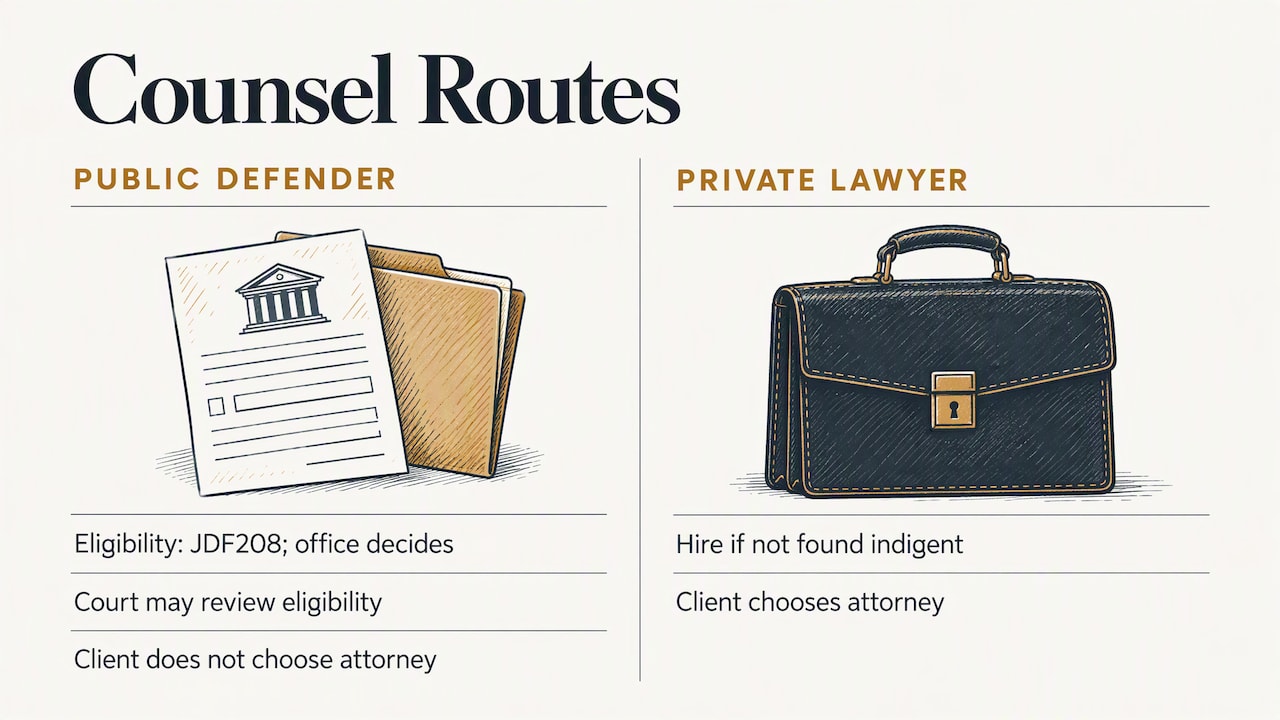
You have a right to a lawyer. In Colorado, criminal charges are prosecuted by district attorneys, and the state Constitution guarantees the right to counsel. If you can’t afford one, you may apply for a public defender by completing Form JDF208. The Office of the Public Defender makes the first eligibility decision, and the court can review it.
If you aren’t found indigent, and you want an attorney, you must hire private counsel. Public defenders are licensed attorneys, and many are excellent trial lawyers. The practical difference is usually caseload and choice: with a public defender you don’t pick the attorney, and with a private lawyer you do. That is why the rest of this guide matters if you’re hiring privately.
A note on timing: if you’ve been arrested, don’t answer questions about the allegations until you’ve spoken with a lawyer, whichever route you take. Asking for a lawyer is a constitutional right, not an admission of anything. Colorado’s judicial branch explains that it is wise to exercise your rights even if you later decide to plead guilty.
Step 2: Verify the License and Disciplinary History
This takes five minutes and many people skip it. The Colorado Supreme Court’s Office of Attorney Regulation Counsel runs a public, searchable attorney database. Each record shows a lawyer’s license status, such as active or disbarred, and whether the lawyer is in private practice. It also shows whether the lawyer reports carrying professional liability insurance.
What to look for:
-
Active status. Anything other than active is a stop sign.
-
Public discipline. Censures, suspensions and disbarments are public record. Testimonials rarely mention them.
-
Name match. Make sure the Colorado registration number matches the lawyer you’re talking to, not a similarly named attorney.
Online reviews are useful for a general feel of how a firm treats people, but they are not a background check. The same principle applies anywhere you’re about to hand over money.
Be wary of awards and badges, too. A “Top 10” label can come from a paid directory. A clean record on the state’s regulation site is a far better signal.
Step 3: Match the Lawyer’s Experience to Your Charge
“Criminal defense” covers a huge range. A first-offense traffic matter, a felony assault, a domestic violence allegation and a juvenile case are handled differently, in different courtrooms, with different consequences. When you vet a lawyer, ask about experience with your specific type of case, not just years in practice.
Questions worth asking:
-
How many cases like mine have you handled in the last few years?
-
Have you taken cases like mine to trial, or do most of them resolve before trial?
-
What outcomes have you seen, including dismissals, reduced charges and verdicts? (A careful lawyer won’t promise a result.)
-
Do you regularly appear in the court where my case is filed?
That last question matters more than people expect. Courts, judges and prosecutors’ offices each have habits. Someone who knows how the local court works can often see problems and opportunities earlier. Colorado’s own guidance on retaining private counsel says to verify the lawyer’s experience in the specific type of case and familiarity with the local jurisdiction.
Why a former prosecutor’s perspective can help
A lawyer who has prosecuted cases knows how the other side evaluates evidence, what makes a file strong or weak, and how charging and plea decisions get made. That is the background Josh McDowell brings to your case. It isn’t a guarantee of any result, and no lawyer can ethically offer one. It does mean the strategy for your case is built by someone who has sat on both sides of the table.
If you want to understand what the work involves before you call anyone, our guide on what a criminal defense lawyer does lays it out in plain terms. If you’re unsure which court or charge category you’re in, the Colorado criminal charges list explains how case types are labeled.
Step 4: Ask Who Will Actually Handle Your Case
This is the question I’d put at the top of the list. At some larger practices, the lawyer you meet at the consultation isn’t the one who appears in court, and the day-to-day work goes to junior staff. That model can work for some people. But you should know which one you’re buying.
Ask directly:
-
Will you personally handle my case from start to finish?
-
Who will appear with me at every hearing?
-
Who answers my calls and emails, and how fast can I expect a reply?
-
How many cases do you carry at one time?
Caseload is the quiet factor behind everything else. A lawyer with fewer open cases has more time to review video and police reports, interview witnesses and prepare for hearings. At McDowell Law Firm, Josh McDowell limits his caseload so he can give each client direct attention and communicate with them personally.
Step 5: Understand Fees Before You Sign
Money is awkward to discuss when you’re frightened, but unclear fee terms cause real trouble later. Here is what you need to know.
Criminal fees can’t depend on the outcome
In criminal cases, a lawyer can’t charge a fee that depends on winning. The ABA Model Rule 1.5(d)(2) prohibits contingent fee agreements when representing a defendant in a criminal case. Colorado’s rules follow the same general approach, but check the current Colorado Rules of Professional Conduct if you want the exact wording. If a lawyer offers to be paid only if you win, treat that as a warning sign. Colorado Rule of Professional Conduct 1.5 prohibits a lawyer from charging a contingent fee for representing a defendant in a criminal case. In other words, a criminal-defense lawyer cannot make the fee depend on whether the client is acquitted, receives a dismissal, or obtains some other particular result.
The same rule says lawyers must charge reasonable fees, and fee arrangements should be communicated to you in writing.
Common fee structures
| Structure | How it works | What to ask |
|---|---|---|
| Flat fee | One set price for a defined scope of work | What stages does it cover? Does it include trial? |
| Hourly | You pay for time spent, often against an advance deposit | What is the rate, and how often will I get itemized bills? |
| Hybrid | A flat fee for early stages, then hourly or a new fee if the case goes to trial | When does the fee change? |
We don’t publish a set price for criminal defense matters, because the work depends on the charge, the evidence and how far the case goes. That is a fair question to bring to any consultation: ask the lawyer to explain exactly how the fee is figured for your charge.
“Retainer” doesn’t always mean what you think
Lawyers use the word loosely. According to an ABA summary of its 2023 ethics opinion, a retainer is technically payment for a lawyer’s availability, not a deposit against future work. The ABA suggests lawyers use plain language, such as calling prepaid money an “advance” or a “deposit for fees.” If someone says “retainer,” ask which one they mean: payment for being available, or prepayment for work to be done.
What to confirm in writing
-
The fee structure: flat, hourly or hybrid.
-
Exactly what work is covered, and what isn’t (for example, trial, appeals or a separate license hearing).
-
Whether costs such as investigators or expert witnesses are included or billed separately.
-
How and when unearned money is refunded if the case ends early.
-
Payment plan options, if you need them.
If you’re dealing with a DUI, our page on DUI lawyer costs explains the factors that move the price.
Step 6: Judge Communication at the First Meeting
The consultation tells you more than any website. Pay attention to how the lawyer treats you in that first conversation.
Good signs:
-
The lawyer asks detailed questions and listens to the answers.
-
They explain the process, and the possible outcomes, in words you understand.
-
They tell you about weaknesses in your case as well as strengths.
-
They don’t pressure you to sign on the spot.
-
They are clear about what they don’t know yet.
Warning signs:
-
A guarantee of a dismissal or acquittal. No honest lawyer can promise one.
-
Vague answers about who will do the work.
-
Reluctance to put fee terms in writing.
-
Pressure to decide immediately when you have no deadline that day.
Everything you tell your lawyer in seeking legal advice is generally protected by attorney-client confidentiality. If you can’t come in person right away, you may be able to start with a confidential online consultation.
Step 7: Think Beyond the Plea Deal
Most people choose a lawyer based on the next court date. It’s worth thinking a little further ahead, because decisions in the case can shape what options you have later.
Other long-term questions to raise:
-
How could a conviction, or a plea, affect my record, my job, my license or my immigration status?
-
Are there options such as dismissal, a deferred judgment or a lesser charge that may apply to my situation?
-
Could the charge affect my driving privileges? (That is especially relevant in DUI and traffic cases.)
A good lawyer will answer those honestly, and tell you when something depends on facts they haven’t seen yet.
Think Beyond the Immediate Charge
A good criminal defense lawyer should look beyond the next court date or the first plea offer. Before resolving a case, you should understand how the result could affect your criminal record, employment, professional licensing, immigration status, firearm rights, driving privileges, and your ability to seal the case later. Some consequences depend on the exact charge or disposition rather than simply whether you were convicted. Ask your lawyer what consequences apply before you make a final decision.
Questions to Ask Any Criminal Defense Lawyer
Bring this list to your consultations. Take notes, and compare answers.
About experience
-
How often do you handle my kind of charge?
-
Have you tried cases like mine in front of a judge or jury?
-
Do you regularly appear in the court where my case is pending?
About your case
-
What do you see as the strengths and weaknesses so far?
-
What are the realistic range of outcomes, and what could change them?
-
What do you need from me, and what should I avoid doing or saying?
-
What deadlines are coming up?
About working together
-
Will you personally handle my case?
-
How will we communicate, and how quickly will you return calls?
-
Will I be told before any plea offer is discussed or accepted?
About money
-
How is your fee set, and what does it cover?
-
Are costs like investigators and experts included?
-
What happens to unearned money if the case resolves early?
-
Can I have the fee agreement in writing before I sign?
How We Approach New Clients
At McDowell Law Firm in Colorado Springs, Josh McDowell, a former prosecutor, personally handles each case and keeps his caseload limited so clients get direct communication and thorough preparation. We represent people charged with misdemeanors and felonies, DUI and traffic offenses, domestic violence allegations and juvenile matters. If you’re weighing options, you can start on our criminal defense page, or go straight to a practice area such as DUI defense. We’re glad to talk through your situation and answer the questions above, whether or not you end up hiring us.
Red Flags and Green Flags at a Glance
| Green flags | Red flags |
|---|---|
| Active license, clean record on the state database | Won’t give a bar number, or the record shows discipline |
| Clear written fee agreement | Verbal-only fees or vague “nonrefundable” terms |
| Specific experience with your charge and court | Non-specific terms of representation |
| Lawyer personally handles your case | You never speak with the attorney |
| Honest about risks and unknowns | Promises of a guaranteed outcome |
| Lets you take time to decide | Pressure to sign immediately |
Frequently Asked Questions
Should I hire a lawyer for a misdemeanor?
Often, yes. A misdemeanor can still bring jail time, fines, probation and a criminal record that shows up in background checks. A lawyer can review the evidence, look for legal problems with the case and explain your options before you decide how to proceed. You can read more about this on our misdemeanor defense page.
Is a public defender a bad choice?
No. Public defenders are licensed attorneys who handle criminal cases every day. The main differences are that you don’t select the attorney and that eligibility depends on a financial determination by the Office of the Public Defender. If you qualify, you can apply with Form JDF208. If you don’t qualify, you will need to hire private counsel.
Can a criminal defense lawyer work for a percentage of the outcome?
No. Under ABA Model Rule 1.5(d)(2), and Colorado law, contingent fees are prohibited in criminal defense. Criminal lawyers typically charge flat or hourly fees, so ask for the structure in writing.
How soon should I hire a lawyer after being charged or arrested?
As soon as you reasonably can. Early on, a lawyer can advise you about what to say and not say, preserve evidence such as video, and make sure you don’t miss deadlines. Evidence can disappear and deadlines can pass quickly, so waiting rarely helps.
Can I switch lawyers if I’m not comfortable?
Yes, you generally can change lawyers, though it may affect timing and fees, and a judge may need to approve a substitution once a case is filed. Review your fee agreement for how unearned money would be handled, and try not to wait until right before a hearing.
Sources
-
Colorado Chief Justice Directive 04-04 (indigency and Form JDF208)
-
Colorado Judicial Branch: your rights if charged with a crime
This article is general information, not legal advice for your situation. Speak with a licensed Colorado attorney about your specific charges.
Additional Reading
-
Top 10 Benefits of Hiring a Property Crime Defense Lawyer in Colorado
-
Do I Need a Lawyer for a DUI in Colorado: Is it Worth Hiring One?
-
What does a Criminal Defense Lawyer do: Role, Job, Knowledge