


You probably have a few immediate questions. Am I going to jail? Can I keep driving? Is there a way to fight this?
Those are the questions we need to answer. An arrest, a police report, or a breath test does not tell us everything about your case. Before you accept a plea, someone needs to examine what happened and whether the prosecution can prove the charge.
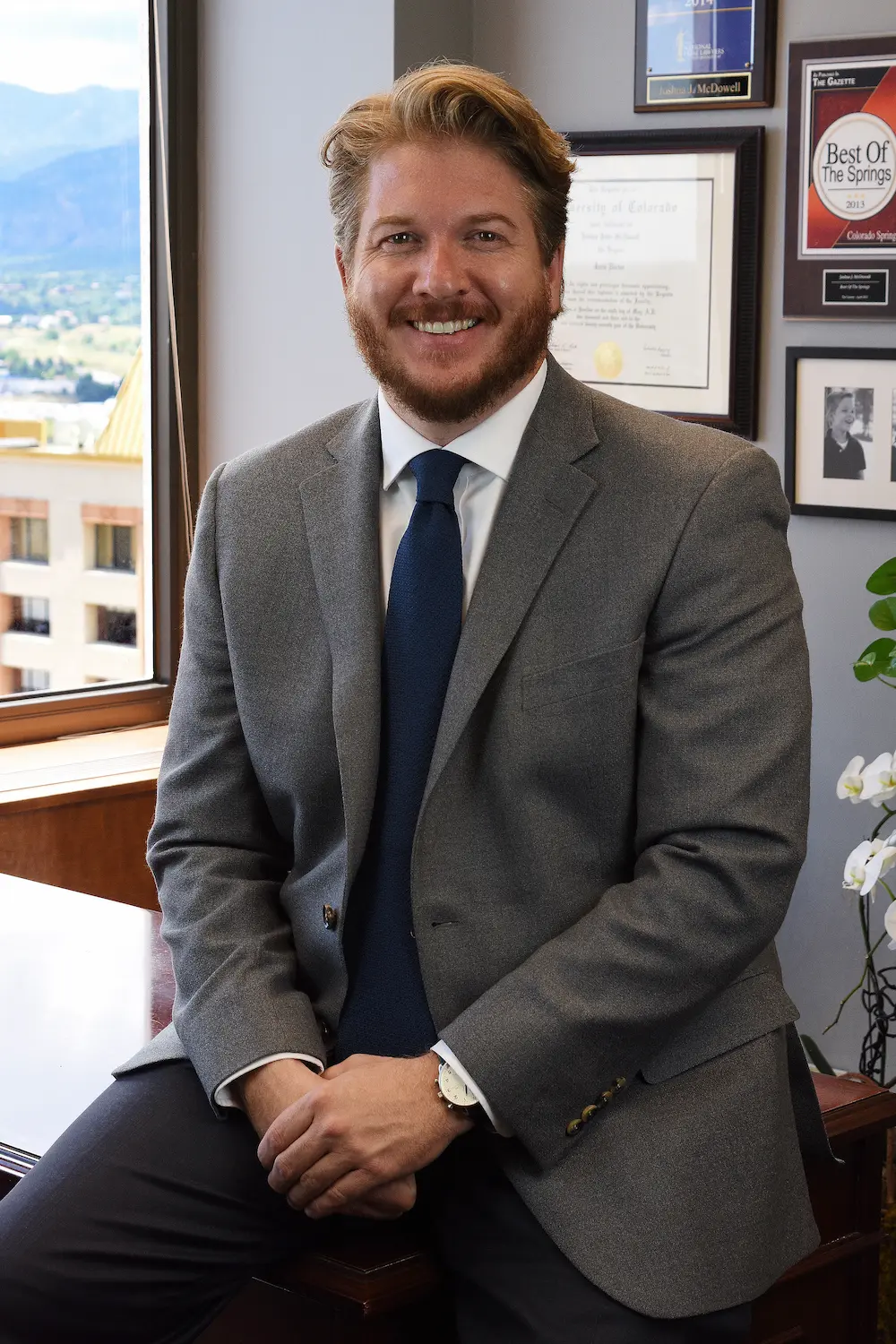
I’m Josh McDowell. I served as an El Paso County Deputy District Attorney from 2004 to 2007 and have practiced criminal defense since 2007. When you hire the McDowell Law Firm, I personally handle your case. We look at the evidence, protect your deadlines, and discuss the options that actually apply to you.
Call 719-227-0022 for a free consultation about your Colorado Springs DUI or DWAI case. Consultations are available by phone, Zoom, or in person.
If an officer gave you a notice of revocation after a qualifying breath test or alleged refusal, you generally have seven calendar days to request a DMV hearing. Blood-test cases usually follow a later notice process. Call promptly so we can check your paperwork and the deadline.
Hiring a lawyer should give you clear answers and a defense based on your facts.
My experience as a prosecutor helps me evaluate the evidence the District Attorney needs, the problems in the investigation, and the likely response to a motion or proposed resolution. My years in criminal defense inform how I challenge that evidence and prepare a case for trial.
My criminal defense work has included cases covered by CBS’s 60 Minutes and other national news outlets. You can review the underlying results and my experience before deciding whether I am the right lawyer for you.
I handle cases personally. You should know who is reviewing the video, talking with the prosecutor, answering your questions, and standing next to you in court.
That starts with listening. What happened before the stop? Did you have an injury that affected the roadside tests? When did you last drive? What did the officer say before requesting a chemical test? Details that seem unimportant can change the analysis.
You can read more about my background and courtroom experience and how to choose a criminal defense lawyer.
In one case, my client faced a second DUI and leaving-the-scene charges after an accident. At trial, we presented evidence that he drank after driving. The jury acquitted him of all charges.
That result depended on the evidence in that case. It is an example of why I investigate the timeline before treating a test result as the answer. You can read the case on our criminal defense results page.
One client, Jesse, wrote, “He always answered my questions quickly.” That is something prospective clients should ask about when choosing counsel. You can read more client reviews of the McDowell Law Firm.
 Posted on Google

 Chandler R
Trustindex verifies that the original source of the review is Google.
Couldnt recommend Josh enough, he did a fantastic job with my case and got all charges dismissed!Posted on Google Jesse CookJosh helped me with a defense case and he did an amazing job! He was extremely knowledgeable throughout the entire process. Josh was also very attentive to my desired outcome of the case and achieved the best results for my situation. If you have any legal needs, you need Josh on your side!Posted on Google
 CharlesI cannot speak highly enough of our lawyer Josh McDowell’s exceptional handling of what could have been a very stressful and unfair situation. Our case centered on a baseless misdemeanor charge of disorderly conduct leveled at us, which falsely accused us of harassment and trespassing in an attempt to secure a restraining order. Despite the DA showing an initial inclination to credit the plaintiff's exaggerated claims, Josh remained steadfast and meticulous in dismantling the opposing narrative with clear, compelling evidence and persuasive arguments. From the outset, Josh demonstrated outstanding diligence, thoroughly investigating every detail, preparing airtight documentation, and effectively communicating with the District Attorney's office. His persistence and skill ultimately convinced the DA to dismiss the case entirely, sparing us the ordeal of a prolonged legal battle and protecting our reputation from these allegations. We are deeply grateful for his professionalism, strategic approach, and unwavering commitment to achieving the best possible outcome. I would highly recommend the McDowell Law firm in Colorado Springs to anyone seeming legal representation.Posted on Google
 Anthony Monaghan Howellsexceptional lawyerPosted on Google
 RachelJosh McDowell is a phenomenal lawyer. I don't think I can fully express how grateful I am for everything Josh did for me. From the very beginning, he treated my case with genuine care and made me feel heard, supported, and protected during one of the most stressful times of my life. His dedication, thoroughness, and compassion were clear in every conversation we had. He never made me feel like just another client--he made me feel like my situation truly mattered. Josh took the time to walk me through every step, always explaining things in a way I could understand and answering all of my questions with patience and kindness. He worked tirelessly behind the scenes, and knowing he was fighting for me gave me so much peace of mind. Because of his skill and commitment, my case was ultimately dismissed--something I will forever be thankful for. If you're looking for an attorney who not only excels at what he does but genuinely cares about the people he represents, I wholeheartedly recommend Josh and his amazing assistant, Genesis. Their support, professionalism, and kindness made all the difference.Posted on Google
 Margaret HowellsYou can trust Josh to do everything possible for good results. For my daughter’s case, Josh kept us up to date during the whole process and was able to get the case dismissed after gathering much evidence.Posted on Google
 Isabel NajeraWorking with the McDowell Law Firm was a very pleasant experience. They helped me navigate the insurance companies and got me a great payout after a bad car accident! They were friendly and responsive and always made me feel heard, I would recommend them if you’re looking for a firm that offers a quality experience and great results!Posted on Google
 Josh GentryMr. McDowell, was amazing. He is an attorney with great skills and great knowledge, helping the client in so many ways. He has helped me out incredibly and is 100% definitely someone that I would recommend going to for help! Great attorney and person all around!Posted on Google
 Amanda AI had the pleasure of working with Joshua McDowell and his team at The McDowell Law Firm, and they are top-notch. With over 20 years of experience, Joshua’s expertise in criminal defense and personal injury law is evident. The firm provides personalized, compassionate service and truly goes above and beyond for clients. Highly recommend if you're in need of a skilled and dedicated attorney in Colorado Springs!Posted on Google
 Indrid ColdMr. McDowell is very confident and highly knowledgeable. I'd say he's the defense you'd need.
Your first court date may be weeks away. A DMV deadline can arrive much sooner.
You do not need to have the police report or blood results before calling. Bring what you have. We can identify what is missing and what needs attention first.
Our guide to what happens after a DUI arrest discusses the early steps in more detail.
Driving under the influence means alcohol, drugs, or both affected you enough that you were substantially incapable of safely operating a vehicle. The law addresses your judgment, physical control, and ability to exercise due care.
A particular BAC is not required for an impairment-based DUI. The prosecution can rely on other evidence, including driving, observations, video, and statements.
DUI per se generally requires a BAC of 0.08 or higher at the time of driving or within two hours afterward. This is the numerical charge. Prosecutors may charge it alongside impairment-based DUI.
A test result still needs review. Collection procedures, timing, instrument records, and laboratory reliability can matter.
Driving while ability impaired means alcohol, drugs, or both affected you to the slightest degree so that you were less able to drive safely than you ordinarily would have been.
A BAC above 0.05 but below 0.08 permits an inference of alcohol impairment. That range is not a required element of DWAI. At 0.05 or below, Colorado law provides a presumption against alcohol impairment, but that does not make every prosecution impossible.
Read more about what a DWAI means in Colorado.
A BAC of 0.15 or higher can trigger Colorado’s persistent drunk driver designation and additional licensing requirements, even on a first offense. A qualifying refusal can also trigger that designation.
At 0.20 or higher at driving or within two hours afterward, a first DUI or DWAI conviction carries a minimum ten-day incarceration sentence, with statutory sentencing alternatives potentially available.
The 0.15 and 0.20 rules serve different purposes. We need to evaluate both rather than simply call the case an “aggravated DUI.”
The following are the basic sentencing ranges under C.R.S. § 42-4-1307. They do not include every surcharge, probation condition, or separate DMV consequence.
| Conviction | Basic Incarceration Range | Statutory Fine | Community Service |
|---|---|---|---|
| First DUI or DUI per se | 5 days to 1 year in jail (minimum can be suspended) | $600 to $1,000 | 48 to 96 hours |
| First DWAI | 2 to 180 days in jail (minimum can be suspended) | $200 to $500 | 24 to 48 hours |
| Second qualifying DUI or DWAI | 10 consecutive days to 1 year in jail | $600 to $1,500 | 48 to 120 hours |
| Third qualifying DUI or DWAI | 60 consecutive days to 1 year in jail | $600 to $1,500 | 48 to 120 hours |
The judge may suspend certain fines. On an ordinary first DUI or DWAI, the minimum jail sentence may be suspended when the statutory evaluation and treatment requirements are met. High-BAC and repeat-offense rules change that analysis.
Second and third offenses also require at least two years of probation and a separate suspended one-year jail sentence that can be imposed for probation violations. Treatment, monitoring, and other conditions may apply.
Active jail is not inevitable on an ordinary first offense. Your BAC, driving, accident history, other charges, compliance, and the evidence all matter.
We first determine whether the charge is provable. If a conviction is likely, we discuss sentencing preparation and the lawful alternatives. Completing classes does not guarantee that a judge will suspend jail.
Our first DUI and DWAI guide explains the distinction between the criminal sentence and license consequences.
Sometimes, depending on the statute and circumstances. A second qualifying conviction ordinarily requires at least ten consecutive days of incarceration. Whether that can be served through an alternative depends in part on the dates of the offenses and the available program.
The stricter five-year rule measures offense date to offense date. It does not run from the end of probation. Third offenses have their own restrictions and exceptions.
Read our discussion of jail and sentencing alternatives for a second DUI.
A DUI, DUI per se, or DWAI can be a Class 4 felony when the statutory requirements for three or more qualifying prior convictions are met. Qualifying out-of-state convictions can count. A long gap between cases does not automatically erase a prior.
The ordinary Class 4 prison range is two to six years, although sentencing enhancements can increase exposure. Probation may be available in some felony DUI cases, but it carries mandatory jail and other requirements. A felony charge requires careful review of both the current evidence and the prior court records.
Accidents causing serious bodily injury or death can also produce separate felony charges, including vehicular assault or vehicular homicide, without three prior DUIs.

A DUI arrest can lead to two proceedings. The court handles the criminal charge. The Colorado DMV handles driving privileges.
A dismissal or acquittal does not automatically undo a separate DMV revocation. Winning an administrative hearing does not automatically dismiss the criminal case. A later conviction can also have its own licensing consequences.
When an officer serves a revocation notice after a qualifying breath result or alleged chemical-test refusal, you generally have seven calendar days to request a hearing. An eligible driver may receive a temporary permit while that hearing is pending.
If you submitted to a blood test, the DMV commonly sends notice later after receiving the result.
The statutory deadline depends on service or deemed receipt of that notice. Do not assume you have seven days from whenever you happen to open the mail. Keep your DMV address current and have the notice reviewed immediately.
For an adult, a first excess-BAC administrative revocation is generally nine months. A first sustained refusal generally carries a one-year revocation; repeat refusals can mean two or three years.
A first DWAI conviction generally adds eight points and does not, by itself, carry the same automatic revocation as a first DUI. Existing points, age, prior offenses, a separate administrative action, and CDL status can change the result. DUI carries twelve points in addition to applicable revocation rules.
See our explanation of driving after a Colorado DUI.
For qualifying violations on or after January 1, 2023, eligible Colorado residents who were at least 21 at the violation may reinstate with an interlock restriction when an excess-BAC revocation begins, once they satisfy the other requirements. They do not necessarily have to serve the old one-month waiting period.
Refusal cases generally retain a two-month no-driving period before eligible early reinstatement. Eligibility is different for younger drivers, nonresidents, and commercial privileges.
Reinstatement can require an ignition interlock agreement, SR-22 proof of insurance, education or treatment documentation, fees, and an application. SR-22 is proof of financial responsibility filed by your insurer. Installing an interlock alone does not restore your license.
Our license reinstatement guide explains the steps. The DMV’s current early-reinstatement requirements also help identify which rules apply.
Call 719-227-0022 if your ability to get to work or care for your family is at risk. We need to check your actual driving status before you drive again.
The roadside handheld breath test and the chemical test requested under Express Consent are different tests with different rules.
Physical roadside exercises, such as walking a line or standing on one leg, are voluntary in Colorado. The preliminary breath test, or PBT, is also voluntary. Declining it does not itself trigger the Express Consent refusal revocation. Its result is generally used to evaluate probable cause, rather than to prove guilt at trial.
An evidential breath or blood test requested under C.R.S. § 42-4-1301.1 is different. Refusing a required chemical test can lead to license revocation and can be admitted as evidence in the criminal case. Police may also seek a warrant for blood. Refusal does not guarantee that no sample will be obtained.
If the officer alleges a refusal, I review what was requested, what you said, the advisement, the timing, and whether a medical or other issue prevented completion. “Refusal” in a report is a conclusion that deserves examination.
Read about PBT versus evidential breath testing and the consequences of refusing a breathalyzer.
The question is whether the admissible evidence proves the charge beyond a reasonable doubt. I compare the report with the recordings, test records, witness accounts, and your timeline.
An ordinary investigative traffic stop requires a lawful basis, commonly reasonable suspicion. An arrest requires probable cause. I examine what the officer actually knew and whether the investigation was unlawfully extended.
A properly operated sobriety checkpoint can permit a stop without individual suspicion. That does not make every checkpoint or every later detention lawful. Our Colorado DUI checkpoint guide explains the distinction.
An officer does not have to see a vehicle moving for the prosecution to charge DUI. Colorado courts recognize actual physical control as driving. A parked-car case can turn on where you were, where the keys were, the vehicle’s condition and location, and the surrounding evidence.
Sitting in a vehicle is not an automatic conviction. Read about actual physical control in Colorado DUI cases.
I review how the horizontal gaze nystagmus, walk-and-turn, and one-leg-stand tests were explained, administered, and recorded. Officer training, lighting, the surface, footwear, injuries, and medical limitations can affect what the evidence means.
Bloodshot eyes, an odor of alcohol, or poor balance do not independently answer whether you were impaired. Medical explanations must fit your history and the evidence. Our field sobriety testing guide explains what officers look for.
Breath-test review can include instrument certification, operator qualifications, observation procedures, test records, and the timing of the sample. Blood-test review can include collection, preservation, storage, chain of custody, and the laboratory’s methods and underlying data.
A procedural mistake does not automatically make a result inadmissible. Some issues affect reliability or admissibility; others affect the weight the jury should give the result. Expert review may be useful when a scientific issue could change the case.
A later test result must be evaluated in relation to driving. Absorption, the timing of drinks, and any drinking after driving can matter. Because DUI per se also reaches a qualifying BAC within two hours after driving, a rising-BAC argument does not automatically defeat that charge.
I review the circumstances of questioning, any custodial interrogation, searches, consent, and warrants. A failure to give Miranda warnings does not automatically dismiss a DUI. We need to identify the violation, the evidence affected, and the remedy the law allows.
Our guide to challenging a DUI charge discusses additional issues. If suppression removes important evidence, we then evaluate what remains of the prosecution’s case.
Legal marijuana use and a valid prescription do not authorize impaired driving. DUI and DWAI can involve marijuana, medication, illegal drugs, or a combination with alcohol.
Colorado’s five-nanogram delta-9 THC rule permits an inference of impairment under the statute. It is not a marijuana version of alcohol’s DUI per se offense. The prosecution still needs to prove the charged offense, and the defense can contest what the result establishes.
I examine the driving evidence, drug-recognition evaluation, sample timing, toxicology, and possible explanations for the observations. Read more about marijuana DUI in Colorado.
A crash can add evidence and potential charges, including careless driving, leaving the scene, vehicular assault, or vehicular homicide. A child in the vehicle may lead to a separate child-abuse allegation. Property damage can affect restitution and sentencing.
We need to examine causation, injury evidence, and each charge’s elements. An accident does not by itself establish intoxication. Related issues are discussed in our leaving-the-scene guide and traffic defense practice.
Underage drinking and driving, or UDD, generally involves a BAC of at least 0.02 and not more than 0.05 at driving or within two hours afterward. A first UDD is a Class A traffic infraction. A young driver can also face DUI or DWAI when the evidence supports those charges.
Licensing rules for younger drivers are stricter. A parent should have the charge and DMV notice reviewed promptly. Learn about our underage DUI defense.
A qualifying DUI, DWAI, excess-BAC event, or refusal can disqualify a CDL holder even when it occurs in a personal vehicle. A first disqualifying event generally means one year without commercial privileges. A second generally means lifetime disqualification, subject to the applicable statutory rules. Some circumstances are more severe.
The 0.04 commercial threshold applies when operating a commercial motor vehicle. An interlock-restricted personal license does not restore commercial privileges. We need to evaluate the CDL consequences before accepting a plea.
A civilian case can affect command reporting, a clearance, driving duties, professional licensing, and employment. A result that avoids jail may still carry consequences for your career.
Tell me about those concerns at the first consultation. Our guide for service members arrested off base in Colorado Springs explains why civilian and military consequences need separate attention.
A Colorado DUI can affect driving privileges here and in your home state. Moving away or returning home does not resolve the case.
We can discuss remote appearances and whether particular dates can be handled without your return. The court controls attendance requirements. You should not assume that hiring counsel excuses every appearance.
State misdemeanor DUI cases arising in El Paso County generally proceed in El Paso County Court, including cases investigated by Colorado Springs police. Felony cases proceed in District Court. The arresting agency and city limits do not, by themselves, determine the court.
Some misdemeanor summons cases begin in the First Appearance Center. Follow the date, location, and instructions on your summons or court order. The El Paso County Judicial Building is at 270 South Tejon Street. Our local court guide explains the county and municipal court distinction.
The case typically involves discovery, conferences with the prosecutor, appropriate motions, and a decision about a plea or trial. I review any proposed agreement with you, including what remains open for the judge to decide and what the DMV may do separately.
If we proceed to trial, the prosecution must prove the charge beyond a reasonable doubt. If a conviction results, we address sentencing, treatment, monitoring, and compliance. Where legal errors may justify an appeal or other review, we discuss the grounds and deadlines promptly.
The fee depends on the charges, prior record, evidence, DMV issues, and the work the case requires. A felony DUI or contested scientific issue can require substantially more preparation than a straightforward misdemeanor case.
At your free consultation, we can discuss the fee, available payment arrangements, and the scope of representation. Ask whether the fee includes the DMV hearing, motions, trial, and expert expenses. You should understand the agreement before hiring an attorney. We include the DUI express consent hearing in our quoted price.
The lawyer’s fee is also separate from court costs, treatment, monitoring, interlock expenses, and insurance requirements. There is no single total that accurately describes every DUI. Our DUI lawyer cost guide discusses the factors to compare.
Attorney Joshua McDowell brings unique insight to DUI defense as a former Deputy District Attorney. He prosecuted DUI cases before dedicating his practice to defending those accused of drunk driving and criminal offenses.
This insider perspective gives clients significant advantages:
Joshua has handled hundreds of DUI cases in El Paso and Teller Counties. He knows Colorado Springs courts, judges, and prosecutors. His trial experience and negotiation skills consistently achieve favorable results for clients facing DUI charges.
When you hire McDowell Firm, you get an attorney who has seen DUI cases from both sides and knows exactly how to win.








Before you decide that pleading guilty is your only option, have the evidence reviewed. Before you assume you can keep driving, have the DMV paperwork checked.
Call 719-227-0022 or request a free consultation. Tell us when you were stopped, whether you took a test, whether you received a revocation notice, and your next court date.
The McDowell Law Firm is at 2 North Cascade Avenue, Suite 1220, in downtown Colorado Springs, near the local courthouses. We represent clients in Colorado Springs, Fountain, Monument, Manitou Springs, and throughout El Paso and Teller counties. Consultations are available in person, by phone, or by Zoom.
You can learn what to bring in our free consultation guide. You do not have to wait for the next court date to start preparing your defense.
Yes, when the evidence and law support that outcome. A dismissal, a negotiated reduction, and an acquittal are different results. A high BAC does not eliminate the need to examine the investigation. A low BAC does not guarantee dismissal.
I can explain the strengths, problems, and options after reviewing the evidence. No lawyer can promise a particular result.
A deferred judgment may be available in an appropriate case with the necessary agreement and court approval. It is not an automatic entitlement. We need to consider eligibility, the terms, the consequences of a violation, and the separate DMV rules.
We discuss a proposed deferral as part of the complete criminal defense strategy, including its effect on the current case and any future sentencing.
You can represent yourself, but a first offense still creates criminal and licensing risks. A lawyer can investigate defenses, protect deadlines, and explain what an offer actually accomplishes. If you cannot afford counsel, you can ask about eligibility for appointed counsel.
DUI and DWAI convictions generally cannot be sealed under Colorado’s ordinary conviction-sealing process. Dismissals, acquittals, and successful deferred judgments are treated differently. Eligibility depends on the complete disposition, including other counts and whether a dismissal was part of a plea in another case.
Sealing criminal records does not necessarily erase DMV records or remove every disclosure obligation. See our Colorado Springs record-sealing guide.
Colorado generally has no time limit that makes a qualifying prior DUI or DWAI stop counting for enhanced sentencing. An old out-of-state case may also count. Obtain the actual disposition, especially if you remember receiving a deferred judgment.
Miranda generally concerns custodial interrogation. Its absence does not automatically invalidate the stop, arrest, or chemical test. The specific questioning and custody circumstances determine whether a statement should be suppressed.
Many cases take months. Testing delays, discovery, motions, the court’s schedule, and a trial can affect the timeline. The DMV hearing deadline can arrive long before the criminal case is resolved. I will explain the next dates and what we are waiting for as the case develops.
The ordinary filing period is generally eighteen months for misdemeanor DUI and three years for felony DUI under C.R.S. § 16-5-401, subject to exceptions and tolling. Vehicular homicide and fatal hit-and-run allegations have different rules. This is a charging deadline, not a deadline for completing an already filed case.
A conviction can appear on criminal and driving records long after probation ends. Employers, licensing boards, immigration authorities, and foreign countries apply different rules. Tell your lawyer about your profession, immigration status, and planned travel before resolving the case.