“Can I get a deferred sentence on this case?” is a question that I get asked a lot as my clients’ cases are in the negotiation phase with the DA. Is a deferred a good deal? Is it something that makes sense in this case? Is it even being offered by the prosecutor? Let’s cover what a deferred sentence is, how it works, and the benefits (and potential drawbacks)
Colorado law provides an option that can help certain defendants avoid a permanent conviction: a deferred judgment and sentence (DJS). Sometimes simply called a “deferred sentence”, or even a “deferred,” this agreement with the prosecutor, when handled properly, can give people an opportunity to keep their record clean while still requiring accountability to the court.
What Is a Deferred Judgment and Sentence?
1. Negotiation
Your defense attorney negotiates the deferred judgment with the prosecutor. Not all charges qualify, and eligibility often depends on your criminal history and the facts of your case. Ultimately, whether a deferred is offered is up to the prosecutor.
2. Plea
You enter a plea of guilty in court, but sentencing is not imposed.
3. Supervision
You are placed on probation-like conditions, often including:
- No new criminal offenses
- Alcohol/drug education or treatment (for DUI, drug, or related cases)
- Community service hours
- Fines or court costs
4. Completion
If you successfully complete the period without violations, your plea is withdrawn and your case is dismissed.
If you fail to meet the terms—for example, you get arrested again or miss required classes—the court can revoke the deferral and immediately enter a conviction and sentence against you. If it is a traffic matter, then the points will enter on your DMV record as well.
Is a Deferred Judgment a Conviction in Colorado?
This is one of the most common questions clients ask. The answer is: no, not if you successfully complete it. While the case is pending, it will show on your record as a guilty plea with a deferred judgment. Once you finish and it’s dismissed, there is no conviction.
Remember: If you violate the terms of the deferral, the judge can enter the conviction, and it will then appear on your permanent record as a conviction.
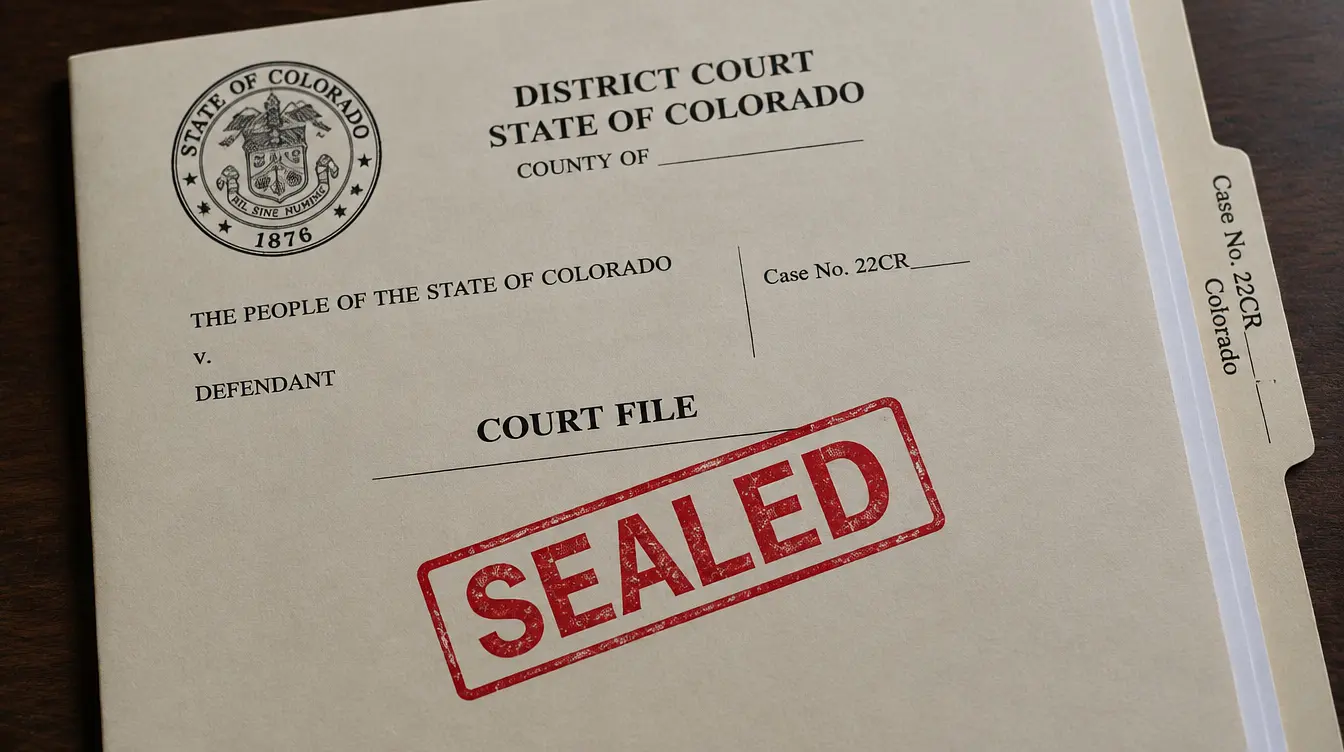
Can a Deferred Judgment Be Sealed?
Yes, in most cases. After your case is successfully dismissed, you may be eligible to seal the record, which means the public cannot see it in background checks. This is one of the biggest benefits of a deferred judgment—it gives you the chance to keep your future clean.
Your attorney can guide you through whether your case qualifies for deferment/sealing.
Benefits of a Deferred Judgment and Sentence
- Avoids a Conviction: You can keep a criminal record from following you for life.
- Sealing Eligibility: Many dismissed cases can be sealed, helping with jobs, housing, and education. Colorado recently changed the sealing laws to be a little more lenient. Many convictions can be sealed after a certain amount of time has passed.
- Second Chance: It allows first-time offenders or those who made a mistake to prove themselves without lifelong consequences.
- Negotiated Outcome: Often better than risking trial or a straight conviction and sentence.
What Types of Cases May Be Eligible?
Deferred judgments are more common in lower-level, non-violent offenses, such as:
- Certain misdemeanors
- Low-level drug possession
- Some theft cases
- First-time DUI or DWAI (in limited circumstances)
Each case is fact-specific, and eligibility depends on both the law and the discretion of the prosecutor and judge.
Important Considerations
- A deferred is not automatic; it must be negotiated.
- It still requires a guilty plea, which is serious. If you fail to complete the conditions, you lose the chance to fight the case because you already entered the agreement.
- Immigration status can be impacted even by a deferred judgment, so non-citizens should get specialized legal advice.
Conclusion
A deferred judgment and sentence can be a powerful tool to protect your future if you are facing criminal charges in Colorado. It allows you to accept responsibility while still keeping the door open to dismissal and record sealing.
If you’re considering this option, the guidance of an experienced defense attorney is crucial. At the McDowell Law Firm, we work to negotiate deferrals where possible and help clients successfully complete them so they can move forward with their lives.
Frequently Asked Questions
Does a deferred judgment appear on your criminal record?
Yes. A deferred judgment generally appears on your criminal record while the case is pending. If you successfully complete all court-ordered conditions and the case is dismissed, you may become eligible to have the record sealed, depending on Colorado law and the nature of the offense.
How long does a deferred judgment stay on your record in Colorado?
A deferred judgment remains on your record during the deferral period. After you successfully complete the terms and the charges are dismissed, the record may still be visible unless it is eligible for sealing under Colorado law. The timing and eligibility for record sealing depend on the offense and the applicable statutes.
What happens after you successfully complete a deferred judgment?
If you successfully complete all conditions of a deferred judgment, the court generally dismisses the criminal charges. Although the case is dismissed, it does not automatically disappear from your record. You may need to pursue record sealing if you qualify under Colorado law.
Can you get a deferred judgment for a DUI in Colorado?
In some situations, a deferred judgment may be available for certain alcohol-related driving offenses, but standard DUI charges in Colorado generally are not eligible for a deferred judgment. Eligibility depends on the specific charge, the circumstances of the case, and the applicable Colorado statutes.
Can a deferred judgment be revoked in Colorado?
Yes. A court may revoke a deferred judgment if you violate the conditions of the agreement. If the deferred judgment is revoked, the court may enter a conviction on the original charge and proceed directly to sentencing.
What happens if you violate the terms of a deferred judgment?
If you violate the conditions of your deferred judgment, the prosecutor may file a motion to revoke the agreement. After a hearing, the court may revoke the deferred judgment, enter a conviction on the original offense, and impose the sentence that could have been ordered when you initially pleaded guilty.
Can you seal your record after completing a deferred judgment?
Possibly. After successfully completing a deferred judgment and having the charges dismissed, you may be eligible to seal your criminal record if the offense qualifies under Colorado law. Eligibility depends on the type of offense, applicable waiting periods, and other statutory requirements.
What is the difference between a deferred judgment and a deferred sentence?
A deferred judgment delays the entry of a conviction while you complete court-ordered conditions. If you successfully complete those conditions, the charges are typically dismissed. A deferred sentence, by contrast, generally involves a conviction followed by a delay in imposing or carrying out the sentence. Colorado most commonly uses deferred judgments rather than deferred sentences in criminal cases.
How do you qualify for a deferred judgment in Colorado?
Eligibility for a deferred judgment depends on several factors, including the nature of the offense, the defendant’s criminal history, the prosecutor’s agreement, and the court’s approval. Not every offense qualifies, and some serious crimes are excluded by law.
Can a deferred judgment help you avoid a permanent criminal conviction?
Yes. One of the primary benefits of a deferred judgment is the opportunity to avoid a permanent criminal conviction. If you satisfy all court-ordered conditions and the case is dismissed, no conviction is entered on the original charge, although the record of the case may still exist unless it is later sealed.
Can you get a deferred judgment for a felony in Colorado?
Yes, some felony offenses may qualify for a deferred judgment, while others do not. Eligibility depends on the specific felony charge, the facts of the case, statutory restrictions, and whether the prosecutor and court approve the agreement.
Can you get a deferred judgment for a misdemeanor in Colorado?
Yes. Many misdemeanor offenses may be resolved through a deferred judgment if the defendant meets the legal requirements and both the prosecutor and the court agree. Whether a deferred judgment is available depends on the specific charge and the circumstances of the case.
Can a deferred judgment affect employment or background checks?
Yes. While a deferred judgment is pending, it may appear on criminal background checks. Even after the case is dismissed, the record may remain visible unless it is sealed. Depending on the employer, licensing agency, or background screening process, a deferred judgment may affect employment opportunities until the record is eligible for sealing.
Can you receive more than one deferred judgment in Colorado?
Possibly. Colorado law does not impose a blanket prohibition on receiving more than one deferred judgment. However, eligibility depends on the specific offense, your criminal history, statutory limitations, and whether the prosecutor and the court approve another deferred judgment. Prior deferred judgments may influence whether one will be offered in a future case.