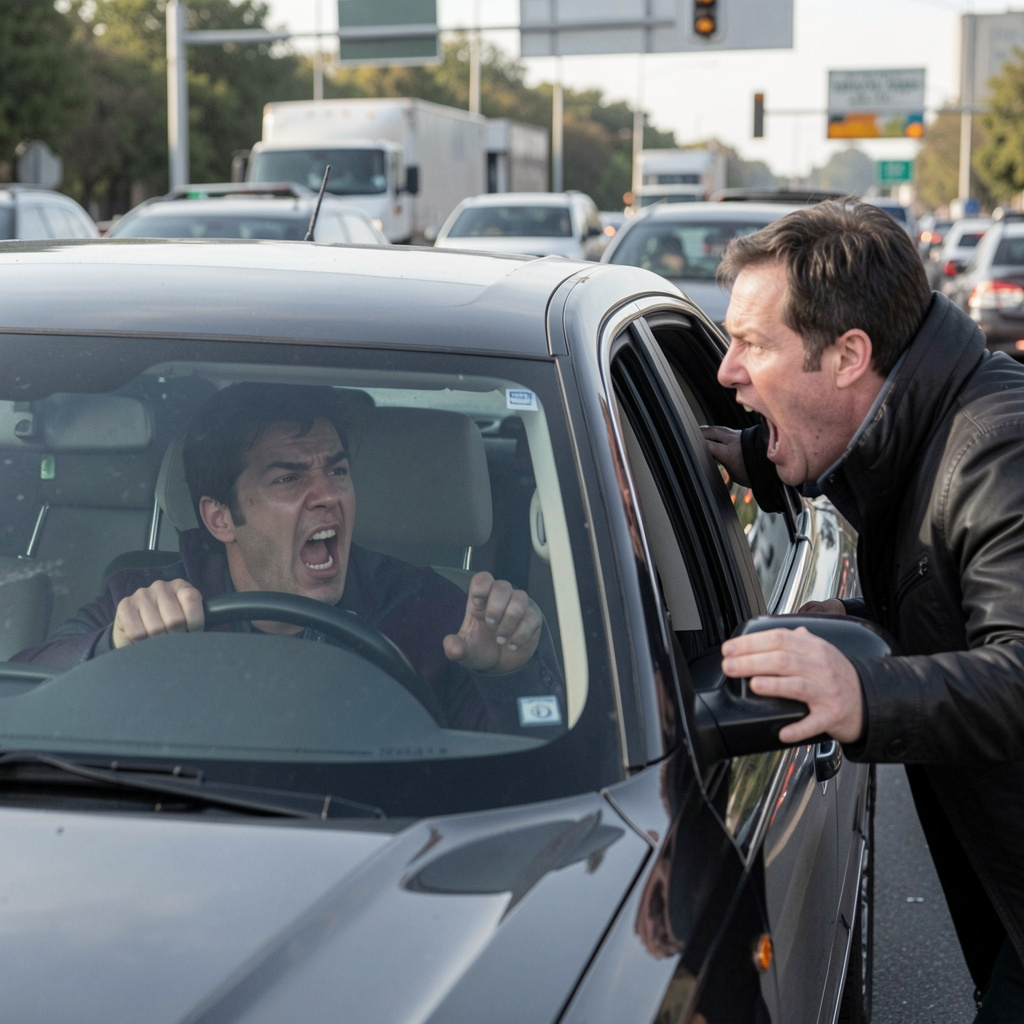
You’re driving home on I-25 after a long day. Someone cuts you off. Words are exchanged through windows. A middle finger gets thrown. Maybe you tap your brakes to send a message, or you follow them a little too close for a little too long.
By the time you pull into your driveway, you’re shaking with anger and convinced you were in the right.
A few weeks later, a deputy knocks on your door with a warrant for your arrest.
Colorado does not have a statute called “road rage.” You will not find that phrase in the criminal code. But that does not mean what is often referred to as “road rage” is legal. Prosecutors charge these incidents under several different laws, and the consequences can range from a traffic ticket to a felony charge, depending on the circumstances and allegations.
Key Takeaways: Is Road Rage a Criminal Offense in Colorado
- Road rage in Colorado can lead to criminal charges such as reckless driving, assault, menacing, disorderly conduct, or even vehicular assault.
- Colorado does not have a specific “road rage” statute, but aggressive driving behavior is prosecuted under existing traffic and criminal laws.
- Reckless driving, excessive speeding, tailgating, brake checking, and threatening another driver may result in misdemeanor or felony charges.
- Road rage incidents involving weapons can lead to felony menacing charges under Colorado law, carrying severe criminal penalties.
- Serious road rage cases that cause injury or death may lead to felony charges such as vehicular assault, vehicular homicide, or attempted murder.
- A road rage conviction in Colorado can result in jail time, fines, license suspension, DMV points, higher insurance costs, and a permanent criminal record.
What Colorado Law Actually Says About Road Rage
There is no specific “road rage” statute in Colorado. Instead, prosecutors look at what happened during the incident and choose charges that fit the alleged conduct.
A single road rage encounter can produce several charges at once. A driver who tailgates, cuts off another car, gets out of the vehicle to yell, and then throws a punch could face charges under several different statutes from one incident. That is why these cases get complicated quickly, and why what feels like a “he said, she said” argument on the highway can turn into a serious criminal case.
The most common charges that I’ve seen filed after a road rage incident in Colorado include:
- Reckless driving under C.R.S. § 42-4-1401
- Careless driving under C.R.S. § 42-4-1402
- Menacing under C.R.S. § 18-3-206
- Harassment under C.R.S. § 18-9-111
- Assault under C.R.S. § 18-3-202, § 18-3-203, or § 18-3-204
- Disorderly conduct under C.R.S. § 18-9-106
- Reckless endangerment under C.R.S. § 18-3-208
- Vehicular assault or vehicular homicide in the most serious cases
Let’s break these down one by one.
Reckless Driving and Careless Driving
Almost every road rage case starts with a driving offense. Someone gets cut off, or takes exception to another driver’s poor driving. Reckless and careless sound similar, but they are not the same charge.
1. Reckless Driving, C.R.S. § 42-4-1401
Reckless driving means driving a vehicle in a way that shows wanton or willful disregard for the safety of persons or property. In a road rage context, this often looks like swerving in front of someone to brake check them, weaving aggressively through traffic to chase another driver, or driving at high speeds while pursuing someone.
Reckless driving is a class 2 misdemeanor traffic offense. A first offense can carry up to 90 days in jail, a fine of up to $300, and 8 points against your driver’s license. A second or later reckless driving conviction can carry higher penalties, including 10 days to 6 months in jail and a fine of up to $1,000.
Eight points is enough to put many drivers at risk of a license suspension if they have other recent violations.
2. Careless Driving, C.R.S. § 42-4-1402
Careless driving is the lesser driving offense. It means driving without due regard for the width, grade, curves, corners, traffic, and other conditions of the roadway. This charge often gets used when the driving was aggressive but not quite reckless, or as a plea-bargain landing spot from a reckless driving charge.
Careless driving is a class 2 misdemeanor traffic offense if no one was hurt. If the careless driving proximately causes bodily injury or death, it becomes a class 1 misdemeanor traffic offense.
For a deeper understanding, explore our blog on Careless Driving vs Reckless Driving.
Menacing: When Anger Crosses Into a Criminal Charge
Menacing under C.R.S. § 18-3-206 is one of the most common charges filed in aggressive driving cases. It can turn a bad day on the road into a serious criminal case.
1. Misdemeanor Menacing
Menacing means knowingly placing or attempting to place another person in fear of imminent serious bodily injury by threat or physical action.
In a road rage case, this could include conduct such as pulling alongside another car and shouting threats, getting out of a vehicle and acting as if a fight is about to happen, or using threatening movements that make another driver believe serious harm is imminent.
Menacing is generally a class 1 misdemeanor. A class 1 misdemeanor in Colorado can carry up to 364 days in jail and a fine of up to $1,000.
2. Felony Menacing
Menacing becomes a class 5 felony when it is committed by the use of a firearm, knife, or bludgeon, or by the use of a simulated firearm, knife, or bludgeon. That matters in road rage cases because pulling out a gun, displaying a knife, holding a bat, or gesturing as if you have a weapon can change the level of the charge.
A vehicle can still matter in a road rage case. If prosecutors believe someone used a car to threaten, block, strike, or injure another person, they may consider other charges, including assault, vehicular assault, reckless endangerment, reckless driving, or careless driving. See C.R.S. § 18-3-206.
A class 5 felony can carry 1 to 3 years in the Colorado Department of Corrections, 2 years of mandatory parole, and fines up to $100,000.
Harassment Charges From Road Rage Incidents
Harassment under C.R.S. § 18-9-111 is another common road rage charge. This statute covers a wide range of conduct, including:
- Striking, shoving, kicking, or otherwise touching a person
- Following a person in or about a public place
- Repeatedly insulting, taunting, or challenging another person in a manner likely to provoke a violent or disorderly response
A driver who follows another car for miles, pulls into a parking lot to keep the confrontation going, or repeatedly makes obscene gestures and shouts insults can be charged with harassment.
Harassment penalties depend on the subsection charged. Many road rage harassment cases are charged as misdemeanors, but the classification can change based on the conduct and whether the prosecution alleges bias-based intent. If the alleged conduct was intended to harass or intimidate someone because of a protected characteristic, the charge can be treated more seriously.
For legal support, consider speaking with a harassment lawyer.
Assault Charges: When Road Rage Cases Turn Violent
When a road rage incident becomes physical, assault charges may follow. Colorado has three degrees of assault, and any of them can be charged depending on what happened.
1. Third Degree Assault, C.R.S. § 18-3-204
Third degree assault is the lowest level of assault. It applies when a person knowingly or recklessly causes bodily injury to another person, or with criminal negligence causes bodily injury by means of a deadly weapon.
A punch through an open window, a shove during a roadside argument, or any other contact that causes pain or visible injury can be charged here.
Third degree assault is a class 1 misdemeanor and an extraordinary risk crime.
2. Second Degree Assault, C.R.S.
Second degree assault can apply in several situations, including when a person, with intent to cause bodily injury, causes that injury by means of a deadly weapon. It can also apply when a person intentionally causes serious bodily injury, or in other circumstances listed in the statute.
In a road rage case, prosecutors may look at second degree assault if a vehicle, firearm, knife, bat, or other object was allegedly used to cause injury, or if the alleged conduct caused serious bodily injury. Second degree assault is commonly a class 4 felony, though the classification and sentencing consequences depend on the subsection charged.
A class 4 felony generally carries 2 to 6 years in prison, mandatory parole, and fines up to $500,000. Some second degree assault charges are crimes of violence, which can require prison and increase the sentencing range.
3. First Degree Assault, C.R.S. § 18-3-202
First degree assault is a class 3 felony and is reserved for the most serious cases. It can apply when someone causes serious bodily injury with a deadly weapon and acts with the intent to cause serious bodily injury.
It can also apply when someone engages in conduct that creates a grave risk of death and causes serious bodily injury under circumstances showing extreme indifference to the value of human life.
Using a vehicle to deliberately ram another driver and cause severe injury can lead prosecutors to consider first degree assault (or vehicular assault), depending on proof of intent and the facts of the case.
A class 3 felony generally carries 4 to 12 years in prison, 5 years of mandatory parole, and fines up to $750,000. Sentencing can be higher if the offense is charged and proven as a crime of violence.
Consulting an assault lawyer can help you make informed legal decisions.
The Levels of Crimes Associated With Road Rage
Here is a quick summary of where road rage charges can fall in Colorado’s criminal hierarchy:
Traffic Offenses
- Careless driving: class 2 misdemeanor traffic offense if no injury or death
- Reckless driving: class 2 misdemeanor traffic offense
Misdemeanors
- Disorderly conduct: classification depends on the subsection charged. Possible petty offense
- Harassment: classification depends on the subsection charged
- Third degree assault: class 1 misdemeanor and extraordinary risk crime
- Menacing without a firearm, knife, bludgeon, or simulated firearm, knife, or bludgeon: class 1 misdemeanor
- Careless driving causing bodily injury or death: class 1 misdemeanor traffic offense
Felonies
- Felony menacing: class 5 felony when committed by use of a firearm, knife, bludgeon, or simulated firearm, knife, or bludgeon
- Second degree assault: commonly a class 4 felony, depending on the subsection charged
- First degree assault: commonly a class 3 felony
- Vehicular assault: class 4 or class 5 felony, depending on whether the case involves alcohol, drugs, or reckless driving
- Vehicular homicide: class 3 or class 4 felony, depending on whether the case involves alcohol, drugs, or reckless driving
Road rage cases often start with a 911 call from one driver about another, ends with the police taking statements from both sides, and produces a charging decision based on whose story the prosecutor finds more credible.
That is why these cases often turn on witnesses, dash cam footage, body camera footage, surveillance video, and inconsistencies between the parties.
Why These Cases Get Overcharged
Prosecutors in El Paso County and across Colorado take road rage cases seriously and in some instances charge a laundry list of offenses for one incident. There are a few reasons for this.
First, the public is sensitive to aggressive driving. Local news stories about freeway shootings, crashes, and violent confrontations have made these cases politically charged.
Second, when a driver calls 911 and reports being threatened, the responding officer is going to take that report seriously. If the alleged victim claims they feared imminent serious bodily injury, that statement can support a menacing allegation. Whether the case becomes felony menacing depends on whether the prosecution can prove the weapon-related element required by C.R.S. § 18-3-206.
Third, road rage incidents almost always involve two angry people, both convinced they are the victim. Prosecutors often charge whoever the police believe started the encounter, which is not always the person actually at fault.
That last part matters. People get charged with road rage offenses even when they were the ones being followed, threatened, or boxed in. The label “aggressor” can depend on who called 911 first, what witnesses saw, and whose statement sounded more credible in the moment.
What to Do If You Are Accused of Road Rage
If you are facing charges from a road rage incident, there are a few things to keep in mind.
Do not talk to the police without an attorney. Anything you say can be used to support the charges, even if you think you are explaining yourself.
Preserve evidence. Dash cam video, cell phone footage, surveillance video, and witness contact information can be critical. Memories fade quickly, and the other driver’s story may become more dramatic over time.
Stay off social media. Posts about the incident, even ones that seem harmless, can be used by prosecutors to argue you are aggressive or unrepentant. Thorough investigators and DAs look at social media. They will see what you posted. Was there video? Inconsistent statements?
Take the charges seriously. Even a misdemeanor harassment or reckless driving conviction can affect your job, your insurance, and your driving record. Felony charges can mean prison time and a permanent criminal record.
Your Next Steps
Road rage cases are not as simple as they look. What feels like a routine misunderstanding on the highway can land you in front of a judge facing a long list of traffic and criminal charges.
The difference between a misdemeanor and a felony often comes down to small facts: whether someone displayed a weapon, whether a vehicle was used to threaten or injure someone, whether anyone was actually hurt, and whether the prosecution can prove intent.
If you are facing charges from a road rage incident in Colorado Springs or anywhere in El Paso County, you need an attorney who understands how these cases get charged and how to push back on overcharging. Former prosecutor Josh McDowell knows what the other side is looking for and how to attack the weak spots in the state’s case.
Call (719) 227-0022 for a free consultation. Your side of the story matters, and the sooner you start defending it, the better your chances of protecting your record and your future.