Colorado gun laws have changed in significant ways over the last few years. Under Governor Polis, Colorado has enacted legislation about where you can carry a gun, how you must store a firearm in a vehicle, what training you need for a concealed handgun permit, how ammunition can be sold, and how certain semiautomatic firearms can be purchased or transferred.
There are also new laws involving gun shows, magazines, firearm theft, 3D-printed guns, protection orders, dealers, and background checks. Many Colorado gun laws passed in 2024 or 2025 did not take effect until 2025 or 2026.
Quick summary
| Year | Major changes |
|---|---|
| 2024 | Sensitive places, concealed-carry training, vehicle storage, protection orders, dealer permits, firearm tax |
| 2025 | Semiautomatic firearm restrictions, ammunition sales, gun-show requirements, firearm theft, dealer rules |
| 2026 | 3D-printed firearms, dealer requirements, ERPO changes, background-check and tracing changes |
Here is what Colorado gun owners need to know about recent Colorado firearm legislative updates and changes
Colorado Gun Law Changes Passed in 2024
Colorado Expanded the Places Where You Cannot Carry a Gun
Senate Bill 24-131 expanded Colorado’s “sensitive place” restrictions beginning July 1, 2024.
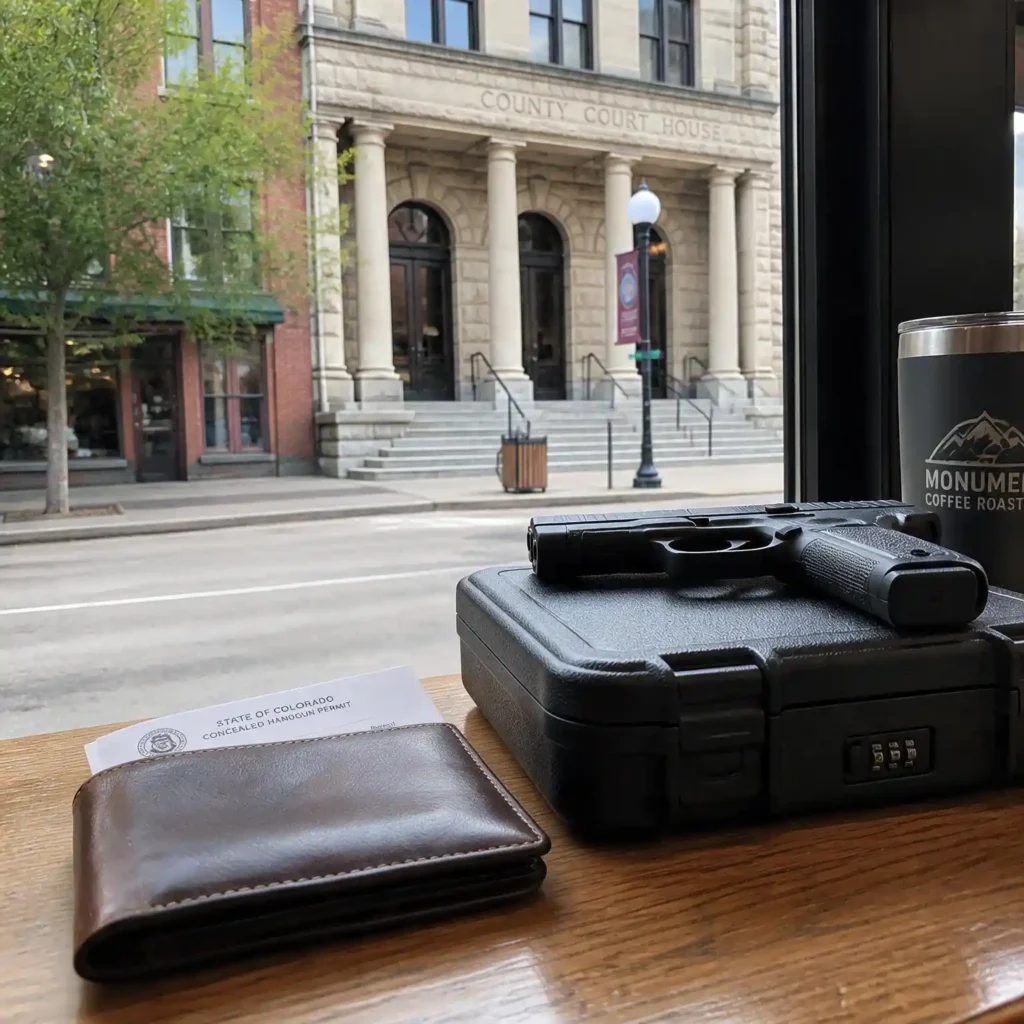
Colorado law now generally prohibits knowingly carrying a firearm, openly or concealed, inside state legislative buildings, courthouses and buildings used for court proceedings, buildings used by local governing bodies, and certain offices of elected officials. The prohibition can also extend to adjacent parking areas, although there are exceptions, including for some concealed handgun permit holders in parking areas.
The law also expanded firearm restrictions at child-care centers, K-12 schools, vocational schools, colleges, universities, and seminaries, subject to exceptions.
Colorado also expanded election-related restrictions. Carrying a firearm in covered polling places, central count facilities, and certain areas around ballot drop boxes can now be prohibited. (This applies to open-carry or concealed weapons)
A concealed handgun permit does not give you the right to carry everywhere in Colorado.
Colorado Changed Concealed Carry Training Requirements
House Bill 24-1174 made major changes to Colorado concealed handgun permit training. Most took effect July 1, 2025.
For most new applicants relying on a training course, the course must now have been completed within one year before the permit application. CCW applicants must also pass a written competency examination and a live-fire exercise.
Renewals changed too. A person renewing a permit generally must again show handgun competency. If the person relies on an initial course or refresher course, it generally must have been completed within six months before the renewal application. A refresher course must include at least two hours of in-person instruction, a written test, and live fire.
Alternative ways to establish competency remain available for some military members, peace officers, instructors, and competitive shooters.
The law also made certain misdemeanor convictions within the prior five years disqualifying for a concealed handgun permit.
If you are renewing a Colorado concealed carry permit, do not assume an old training certificate or online course will still qualify.
Colorado Now Requires Guns to Be Secured in Unattended Vehicles
House Bill 24-1348 took effect January 1, 2025.
If you knowingly leave a handgun in an unattended vehicle, it generally must be in a locked hard-sided container, out of plain view, and inside a locked vehicle, locked trunk, or locked recreational vehicle.
Rifles, shotguns, and other non-handguns can generally be stored in a locked hard-sided or soft-sided container. If a soft-sided container is used, a locking device must also be installed on the firearm.
The law contains exceptions for certain hunting activities, farm and ranch operations, antique firearms, peace officers, active-duty military members, people living in a vehicle or RV, and some other situations. A violation of this statute is a civil infraction.
Simply hiding a gun under your seat isn’t good enough, and if discovered by police, it can get you a ticket.
Protection Orders Can Require Firearm Relinquishment
House Bill 24-1122 also took effect January 1, 2025.
When certain temporary protection orders are based on domestic violence involving the threatened, attempted, or actual use of physical force, the respondent must be notified that they cannot possess or purchase firearms or ammunition while the qualifying order remains in effect. The respondent must also relinquish firearms and ammunition within their immediate possession or control as required by law.
If you are served with a protection order, read the firearm provisions carefully. Unlawful firearm possession can create a separate criminal issue.
Colorado Created a State Firearms Dealer Permit
House Bill 24-1353 created a Colorado firearms dealer permit requirement beginning July 1, 2025.
Most people engaged in the business of dealing firearms now need a Colorado permit in addition to a federal firearms license. Dealing firearms without the required state permit is an unclassified felony punishable by a fine of up to $250,000.
The law also added dealer rules involving employees, security, recordkeeping, inspections, and suspicious transactions.
Colorado Added a 6.5 Percent Gun and Ammunition Tax
House Bill 24-1349 sent Proposition KK to Colorado voters. After voters approved it, Colorado imposed a 6.5 percent excise tax on qualifying retail sales of firearms, ammunition, and firearm precursor parts beginning April 1, 2025.
The tax is imposed on qualifying vendors and can increase the final price consumers pay.
Some Additional 2024 Gun Law Changes of Note
Senate Bill 24-003 expanded the Colorado Bureau of Investigation’s statewide authority to investigate certain illegal firearm activity.
Senate Bill 24-066 created merchant-category-code requirements for payment networks and processors serving firearm and ammunition businesses. It does not prohibit buying a firearm with a credit card.
Colorado Gun Law Changes Passed in 2025
Colorado Restricted Transactions Involving Certain Semiautomatic Firearms
Senate Bill 25-003 created the biggest Colorado gun law change of this period. Its major firearm-purchase provisions took effect August 1, 2026.
The law generally prohibits knowingly manufacturing, distributing, transferring, selling, or purchasing a “specified semiautomatic firearm” unless an exception applies.
That term generally includes semiautomatic rifles and shotguns with detachable magazines and certain gas-operated semiautomatic handguns. The law excludes some firearm types and specifically listed models.
The law focuses on manufacture, distribution, transfer, sale, and purchase. Existing possession, by itself, is not what SB25-003 prohibits.
Can You Still Buy a Covered Semiautomatic Firearm in Colorado?
In many cases, yes, but the process changed.
A qualifying purchaser can use an exception after completing required firearm training. Depending on the circumstances, that may involve Colorado hunter education plus a basic firearm safety course, or an extended course.
A person generally must first obtain a firearm safety course eligibility card through a sheriff. That process includes identification and a name-based background check.
A first unlawful transaction involving a specified semiautomatic firearm is generally a class 2 misdemeanor. A second or subsequent offense is generally a class 6 felony.
If you are buying a semiautomatic firearm in Colorado in 2026, the statutory definition, operating system, magazine configuration, and exclusions matter.
Colorado Increased the Penalty for Large-Capacity Magazines
Colorado has generally prohibited magazines capable of accepting more than 15 rounds since 2013, subject to exceptions including grandfathered possession.
SB25-003 increased the standard penalty for unlawful sale, transfer, or possession of a large-capacity magazine to a class 1 misdemeanor. SB25-003 also defines a “rapid-fire device” and classifies it as a dangerous weapon under Colorado law.
Note: Because Colorado separately regulates possession of dangerous weapons, this provision is broader than a restriction on firearm sales or transfers.
A person who lawfully possessed a qualifying magazine on July 1, 2013 and maintained continuous possession may still fall within the grandfather provision.
Colorado Changed Ammunition Sales
House Bill 25-1133 took effect July 1, 2026.
Retail ammunition generally must now be stored so customers need assistance from the seller to access it.
The law also generally prohibits retail ammunition sales to people under 21, but includes exceptions for certain hunters, military members and veterans, some people protected by protection orders, shooting-range purchases, certain grandfathered purchasers, and rimfire ammunition.
Covered ammunition deliveries also generally require age verification and written acknowledgment of receipt.
A first unlawful retail sale in violation of these requirements is generally a civil infraction. A second or subsequent violation is a class 1 misdemeanor.
https://leg.colorado.gov/bills/HB25-1133
Colorado Added Gun Show Requirements
House Bill 25-1238 took effect January 1, 2026.
Gun-show promoters must meet new requirements involving security plans, liability insurance, entrance and exit monitoring, video surveillance, and access by minors. Promoters must also verify compliance with Colorado’s three-day waiting period before customers leave with purchased firearms.
Stealing a Firearm Is Now a Felony Regardless of Value
https://leg.colorado.gov/bills/hb25-1238
House Bill 25-1062 took effect June 2, 2025.
Theft of any firearm is now a class 6 felony regardless of the firearm’s value.
Colorado Expanded Firearm Consequences for First-Degree Auto Theft
House Bill 25-1171 added first-degree motor vehicle theft to offenses that can trigger Colorado’s possession of a weapon by a previous offender law.
An auto-theft conviction can therefore affect a person’s future right to possess firearms. The law also allows some qualifying people to seek restoration of firearm rights after the required period.
https://leg.colorado.gov/bills/HB25-1171
Other 2025 Colorado Gun Law Changes
House Bill 25-1225 created new election-intimidation rules. In some circumstances, visibly carrying a firearm, imitation firearm, or toy firearm while interacting with or observing election activity creates a rebuttable presumption of intimidation.
Senate Bill 25-034 created a voluntary process allowing a person to waive the right to purchase firearms, although implementation depends on required funding.
Senate Bill 25-205 created a process for federally licensed dealers to request serial-number checks before buying firearms from private individuals. House Bill 25-1314 expanded enforcement authority within the Department of Revenue’s Firearms Dealer Division.
Senate Bill 25-158 created state procurement requirements for certain government contracts involving firearms and National Firearms Act items.
Colorado Gun Law Changes Passed in 2026
Colorado Restricted 3D-Printed Guns and Firearm Components
House Bill 26-1144 took effect July 1, 2026.
Colorado now prohibits knowingly manufacturing or producing a potentially functioning firearm, unfinished frame or receiver, large-capacity magazine, or rapid-fire device through 3D printing, subject to exceptions for certain federally
licensed manufacturers and qualifying gunsmithing programs.
Colorado defines 3D printing broadly to include additive and subtractive manufacturing.
A first offense is a class 1 misdemeanor. A second or subsequent offense is a class 5 felony.
Colorado Expanded Who Can Seek an Extreme Risk Protection Order
Senate Bill 26-004 expanded the list of people and institutions that can petition for an extreme risk protection order.
More Rules for Colorado Firearms Dealers
House Bill 26-1126 expanded Colorado’s firearms dealer laws.
It clarified the state permit requirement, expanded recordkeeping and security rules, and requires dealers to report firearm theft or loss to the Department of Revenue within 48 hours. It also prohibits state agencies from using dealer records to create a firearm ownership registry.
Other 2026 Changes
House Bill 26-1265 requires local law enforcement to use the ATF’s electronic firearm tracing system for covered recovered or confiscated firearms.
House Bill 26-1302 changed operating-hour requirements for CBI’s InstaCheck background-check unit. It did not eliminate Colorado’s firearm background-check requirement.
What Colorado Gun Owners Need to Know in 2026
- If you carry a handgun, know where you can legally carry it.
- If you leave a handgun in your car, secure it correctly.
- If you have a concealed handgun permit, check the new training rules before renewal.
- If you plan to buy or transfer a semiautomatic firearm, determine whether SB25-003 actually covers that firearm and whether you qualify for an exception.
- If you possess a magazine over 15 rounds, know when and how you acquired it.
- And if you have a prior felony, qualifying misdemeanor, domestic violence protection order, extreme risk protection order, or other possible firearm disability, do not guess about whether you can legally possess a gun. Talk to an attorney in your area to discuss your specific situation. These cases can be tricky with overlapping statutes and new regulations. Remember, ignorance of the law is not a valid defense.
This article summarizes the major Colorado firearm-law changes enacted from 2024 through 2026 that are most likely to affect gun owners, purchasers, dealers, and criminal cases.
It is not a complete list of every gun-related appropriations, education, victim-services, or measures. See also:
- HB25-1098, concerning an automated protection-order victim-notification system, contingent on funding. HB25-1098
- HB25-1250, requiring distribution and posting of gun-violence-prevention materials for school communities. HB25-1250
- SB25-059, concerning state support following mass shootings. SB25-059
- SB26-124, which revised portions of the protection-order notification framework. SB26-124 HB26-1113’s election-intimidation clarification, discussed above.
Can You Be Arrested for Violating Colorado Gun Laws?
Yes. Colorado gun law violations range from civil infractions to felonies.
Unsafe firearm storage in a vehicle can be a civil infraction. Carrying a firearm in certain prohibited locations can be a class 1 misdemeanor. A second violation involving a specified semiautomatic firearm can be a class 6 felony. A second offense involving unlawful 3D printing can be a class 5 felony.
Other gun cases turn on the person rather than the firearm. A gun may be completely legal to own, but possession can still be a crime if the person is legally prohibited from possessing firearms.
C.R.S. § 18-12-108 generally makes knowing possession, use, or carrying of a firearm or another covered weapon by a person with a qualifying prior conviction or adjudication a class 5 felony.
Not every offense triggers Colorado’s POWPO statute. The precise offense, conviction date, jurisdiction, and any restoration of rights must be examined. Federal law may impose a separate prohibition.
https://colorado.public.law/statutes/crs_18-12-108
What kind of gun was it? Where was it? Who owned it? When was it acquired? What magazine was attached? Did you have a concealed handgun permit? Was there a protection order? Do you have a prior conviction? Was the case about possession, purchase, sale, or transfer?
Those facts can completely change the charge and the defense.
Related Resources:
- The Lautenberg Amendment
- Are stun guns legal?
- Illegal weapons in colorado
- What is considered a deadly weapon?
Frequently Asked Questions
What are the gun laws in Colorado in 2025?
Colorado’s 2025 gun laws are largely shaped by Senate Bill 25-003. The law regulates the sale and purchase of specified semiautomatic firearms, establishes permit and training requirements for certain purchases, and classifies rapid-fire devices as prohibited dangerous weapons under Colorado law.
When does Colorado’s new gun law go into effect?
Most provisions of Senate Bill 25-003 take effect on August 1, 2026. Beginning on that date, new restrictions on specified semiautomatic firearms and rapid-fire devices become enforceable under Colorado law.
Is Colorado’s new gun law constitutional?
The constitutionality of Colorado’s new gun law has not been definitively decided by the courts. While supporters argue the law promotes public safety, opponents have raised Second Amendment concerns, and legal challenges may continue as the law is implemented.
Are super safety triggers legal?
Under Senate Bill 25-003, devices that increase the rate of fire of a semiautomatic firearm, including devices commonly referred to as super safety triggers, may be classified as prohibited rapid-fire devices under Colorado law. Anyone with questions about a specific device should consult a qualified firearms attorney.
How does a super safety trigger work?
A super safety trigger is a device designed to increase the rate of fire of a semiautomatic firearm by altering the firearm’s trigger reset function. Under Colorado law, devices that increase a firearm’s rate of fire may be regulated as rapid-fire devices.
Are binary triggers legal in Colorado?
Senate Bill 25-003 broadly regulates rapid-fire devices that increase the firing rate of a semiautomatic firearm. Whether a particular binary trigger is prohibited depends on how it is classified under Colorado law, so owners should review the current law and seek legal guidance if they have questions.