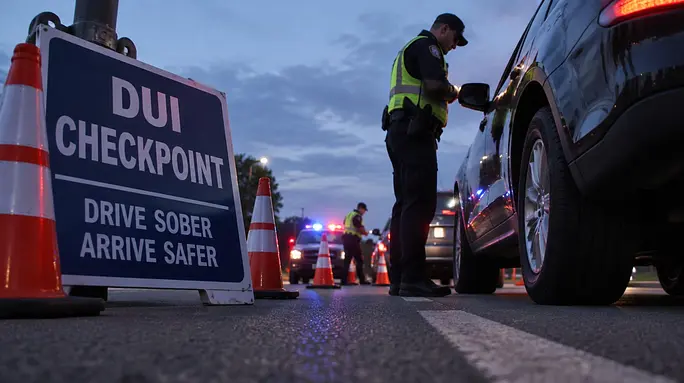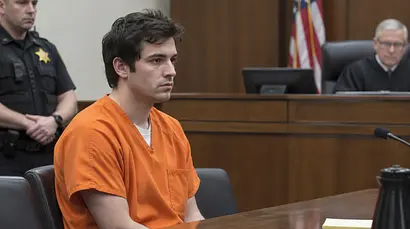
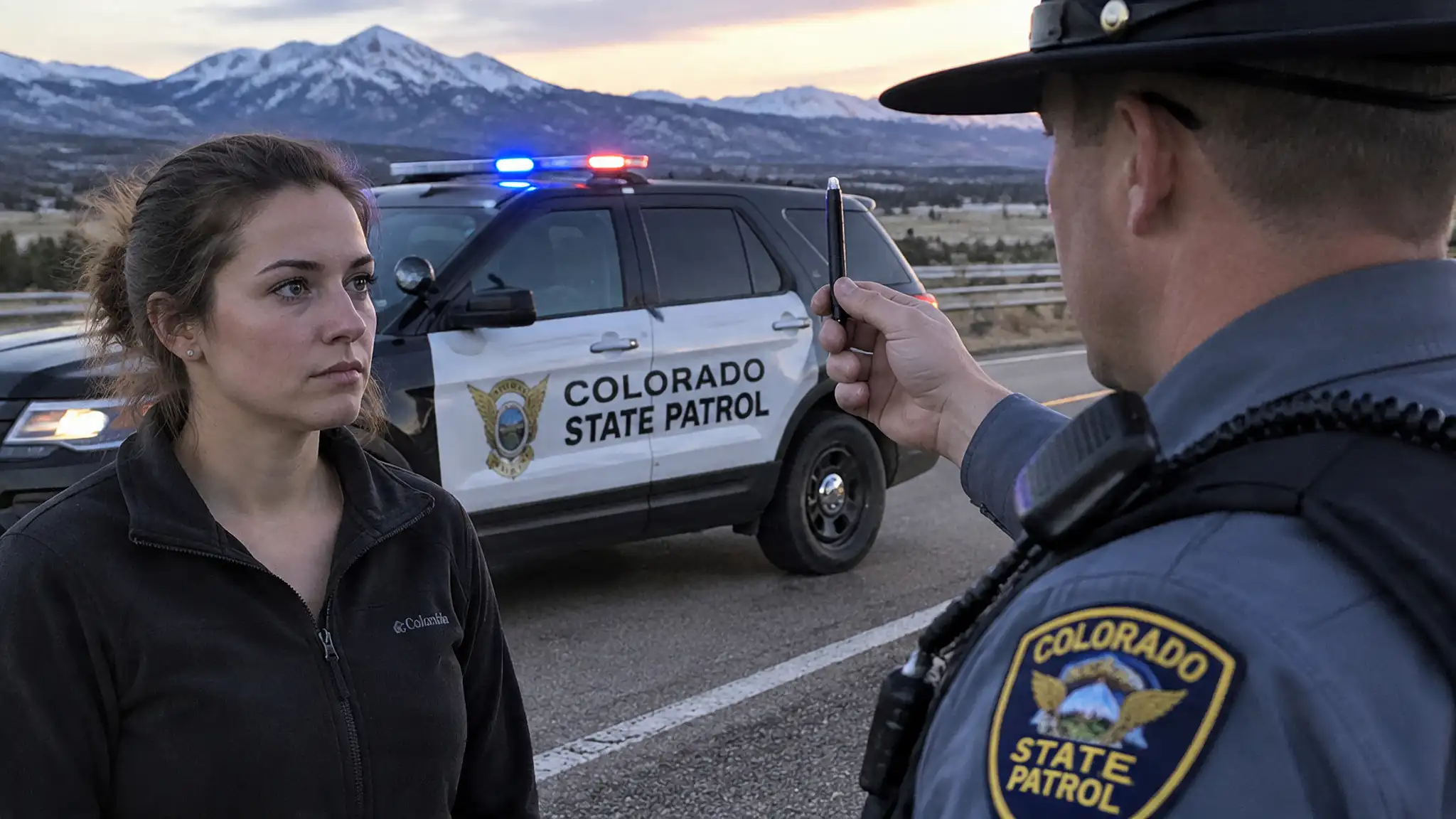
Sometimes. But if you are convicted of a second DUI or DWAI in Colorado, the judge generally must impose at least 10 consecutive days of incarceration. Whether you can serve that sentence at home or through another program depends on the dates of your offenses, your circumstances, and the court’s decision.
There is another question to answer first: Does the prosecution have a case it can prove?
An arrest does not mean you have to plead guilty. And a prior DUI does not prove that you were impaired this time.
I served as a Deputy District Attorney in El Paso County from 2004 to 2007. I have practiced criminal defense since 2007. When someone comes to me after a second DUI arrest, we need to examine the evidence, the prior court record, and the available sentencing options before deciding what to do.
Quick Summary: Can You Avoid Jail on a Second DUI in Colorado
- Yes, but avoiding all jail time after a second DUI in Colorado is generally difficult.
- A second DUI, DUI per se, or DWAI conviction carries 10 consecutive days to 1 year in county jail under C.R.S. § 42-4-1307(5)(a).
- The court may use certain sentencing alternatives authorized under C.R.S. § 18-1.3-106, depending on the circumstances of the case.
- Colorado law also provides for $600–$1,500 in fines, 48–120 hours of useful public service, and at least 2 years of probation for a second offense.
- The specific sentence can depend on the prior conviction, the circumstances of the new DUI, and the sentencing options available to the court.
- Bottom line: A second DUI does not automatically mean you must serve the full one-year maximum, but Colorado law imposes a 10-day mandatory jail minimum for a standard second offense, subject to the statutory sentencing alternatives.
What Is the Mandatory Jail Sentence for a Second DUI?
C.R.S. § 42-4-1307(5) sets the jail range at 10 consecutive days to one year. The minimum cannot simply be suspended because you completed treatment or have a job. The statute does, however, allow sentencing alternatives in certain circumstances.
You do not receive good-time deductions during the mandatory 10 days. You receive credit for time already spent in custody for this offense before conviction. That credit should be checked against the actual custody record.
A second offense also carries a $600 to $1,500 fine, although the judge may suspend the fine; 48 to 120 hours of community service, with no authority to suspend the minimum; and a probation sentence of at least two years.
The court must also impose a separate, suspended one-year jail sentence that can be activated, in whole or in part, for probation violations.
Level II alcohol and drug education or treatment is required as a probation condition. Monitoring, interlock requirements, court costs, and other conditions can add to the burden. Driver’s license consequences must be evaluated separately from the criminal sentence.
Remember: Ten days’ incarceration is the minimum on a second drunk driving conviction in Colorado. It is not a prediction of what a judge will impose in your case.
Does a DWAI Count as a Prior Drunk Driving Conviction?
Yes, for these sentencing purposes. The second-offense statute covers DUI, DUI per se, and DWAI. A prior DWAI followed by a new DWAI can trigger the same 10-day minimum.
That matters during plea negotiations. Reducing a second DUI to DWAI does not eliminate the mandatory minimum or change the basic second-offense sentencing range under this statute.
The difference may matter for other reasons, but you should understand exactly what the proposed plea accomplishes.
Colorado does not have a time limit after which a qualifying prior conviction stops counting for this purpose. A conviction from 20 years ago can still count.
Out-of-state convictions can also count when the underlying conduct would qualify under Colorado law. Certain other convictions, including alcohol- or drug-related vehicular assault and vehicular homicide, also appear in the statute as priors.
What If Your First Case Was a Deferred Judgment?
This is a reason to get the actual court records.
Under C.R.S. § 42-4-1307(2)(b), a deferred judgment can count as a conviction for sentencing under that section. A successfully completed deferred judgment does not.
If your only earlier qualifying case ended in a successfully completed deferred judgment, you may be sentenced under the first-offense provisions. If the deferred judgment remains open at the time of sentencing, it ordinarily counts.
Alleged new criminal conduct can also threaten the deferred judgment in the earlier case, subject to the required proceedings.
First-offense sentencing does not guarantee that you will avoid jail. A judge can still impose jail within the applicable range. And a BAC of 0.20 or higher at the time of driving or within two hours afterward triggers a 10-day minimum even for a first DUI or DWAI, although sentencing alternatives remain available.
Note: There is a difference between mandatory minimums and the actual sentence imposed by the court. In theory, you could serve a lot more than 10 days in jail on a first conviction, even where there is no mandatory sentence.
On a second offense, the court must sentence to at least 10 days, but in practice they have the entire sentencing range available to them.
The completed-deferred exception is specific to this sentencing statute. Do not assume that it erases the case for DMV purposes or every other legal purpose.
The Five-Year Rule: When Is Home Detention Available?
The age of your prior offense affects how you may serve the mandatory sentence.
Under § 42-4-1307(5)(b), the stricter rule applies when the new violation occurred less than five years after the prior violation. The statute measures offense date to offense date. It does not measure from the date of conviction or the date probation ended.
For example, a prior offense in March 2021 and a new offense in April 2026 fall outside that restriction, even if the first case remained open until 2022.
If the offenses are at least five years apart, the court may use the alternatives authorized by C.R.S. § 18-1.3-106. Depending on eligibility and program availability, that can include home detention or work release.
Home detention is still a sentence with enforceable restrictions. The court and supervising program determine where you must remain, how you are monitored, and whether you may leave for approved purposes. Do not assume you will receive home detention or that the judge will impose only 10 days.
If the offenses are less than five years apart, ordinary home detention is generally unavailable during the mandatory minimum.
The statute allows certain county programs for continuing employment held at sentencing, continuing enrollment at an educational institution, or attending court-ordered Level II education or treatment.
Work release may let you continue working while returning to custody outside approved hours. The county must offer an eligible program, and the court must authorize it.
Your lawyer should check those requirements before sentencing. Keep in mind, not every county in Colorado currently has work release programs available.
Is There an Exception for Serious Health or Safety Risks?
Yes. C.R.S. § 42-4-1307(6.7) allows alternative sentencing, including home detention, when exceptional circumstances would make jail a substantial and imminent risk to the person’s health or safety.
The provision also addresses risks to jail operations or people in the jail when the sheriff advises the court of those risks. The judge must make findings on the record.
If your request relies on your own health or safety, you must expressly waive confidentiality for the medical or other health information supporting it.
This is a narrow exception. Ordinary work disruption or family hardship does not, by itself, meet that standard.
Can You Challenge the Stop, Arrest, or Chemical Test?
Yes. Before discussing how you might serve a sentence, we need to determine whether the evidence supports a conviction.
For an ordinary investigative traffic stop, police need reasonable suspicion supported by specific facts. An arrest requires probable cause. The officer’s report is one source of information. Video, dispatch recordings, witness accounts, and the timing of the investigation may show something different.
Was there an actual traffic violation? What did a caller report? Was the tip reliable? Did the officer develop a lawful basis to extend the stop? Were medical conditions or physical limitations mistaken for impairment?
Those questions require facts. Touching a lane line once does not automatically make a stop illegal. An anonymous report does not automatically make it valid or invalid. The circumstances matter.
If police violated your rights, a suppression motion may keep evidence out of court. Whether that ends the prosecution depends on the ruling, any applicable exceptions, and the evidence that remains.
A Breath or Blood Result Deserves Scrutiny
A BAC number does not answer every question about the test that produced it.
For breath testing, the review should include the instrument’s certification and records, the operator’s qualifications, the test sequence, and compliance with the required deprivation period.
Colorado’s testing regulations require a 20-minute deprivation period with specified observation procedures before an evidential breath test.
For blood testing, the questions include who collected the sample, how it was preserved and stored, its chain of custody, and the laboratory’s procedures and underlying records.
However, a procedural error does not automatically exclude the result. C.R.S. § 42-4-1301(6)(f) distinguishes errors that make a test unreliable enough to be inadmissible from errors that affect how much weight the fact finder should give it.
Timing matters, too. DUI per se requires proof of a BAC of at least 0.08 at the time of driving or within two hours afterward. The express consent statute also requires cooperation so that a sample can be obtained within two hours.
A late sample is not an automatic dismissal of a criminal DUI case. Its admissibility and what it can establish require separate analysis. The prosecution may also pursue impairment-based DUI or DWAI using other evidence.
Understand the difference between DUI and DWAI.
Blood draws raise constitutional questions as well. In Missouri v. McNeely, the Supreme Court rejected the claim that alcohol’s natural dissipation always justifies a warrantless blood draw. In Birchfield v. North Dakota, the Court distinguished breath testing from blood testing under the search-incident-to-arrest exception.
The practical question is whether police had a warrant, valid consent, or another recognized exception to the warrant requirement. The absence of a warrant alone does not resolve every case.
Refusing a test does not make the prosecution disappear. In Fitzgerald v. People, 2017 CO 26, the Colorado Supreme Court upheld the use of chemical-test refusal evidence against a Fourth Amendment challenge. Refusal can also create separate driver’s license consequences.
Will the Jury Hear About Your Prior DUI?
In an ordinary misdemeanor second-DUI case, the prior conviction is a sentencing issue. Under § 42-4-1307(9)(b)(II), the prosecutor is not required to plead or prove it at trial to obtain the enhanced misdemeanor sentence.
That does not create an absolute guarantee that a prior incident can never become admissible for another legally permitted purpose. Evidentiary issues need to be addressed before trial. Generally, the answer is no; it won’t be admissible at trial.
The prosecution still must prove the current charge beyond a reasonable doubt. Your prior record does not relieve it of that burden.
An acquittal on the DUI-related charges avoids the mandatory sentence. A negotiated resolution to a non-DUI offense may also avoid that particular minimum, although the new charge can carry its own penalties.
Neither outcome is something a lawyer can promise. A DWAI conviction, meanwhile, still triggers the second-offense minimum when there is a qualifying prior.
What Can You Do Before Sentencing?
If a conviction is likely, preparation can support a request for an available sentencing alternative or a shorter sentence within the lawful range.
Follow your bond conditions. Get the required evaluation and discuss appropriate treatment with your lawyer. Document compliance with sobriety monitoring.
Gather employment records and information about caregiving duties. Before starting community service, confirm that the court will accept the program and hours.
These steps do not cancel mandatory penalties. They give the judge specific information about your circumstances and what you are doing to prevent another offense.
Talk With a Colorado Springs DUI Lawyer
A second DUI charge deserves a careful review before you decide how to resolve it. We need the prior case disposition, the dates of both offenses, and the evidence from the new investigation. Then we can discuss the defenses and sentencing options that actually apply to you.
The McDowell Law Firm represents people facing DUI charges in Colorado Springs, El Paso County, and Teller County. Call 719-227-0022 for a free consultation by phone, Zoom, or in person.