
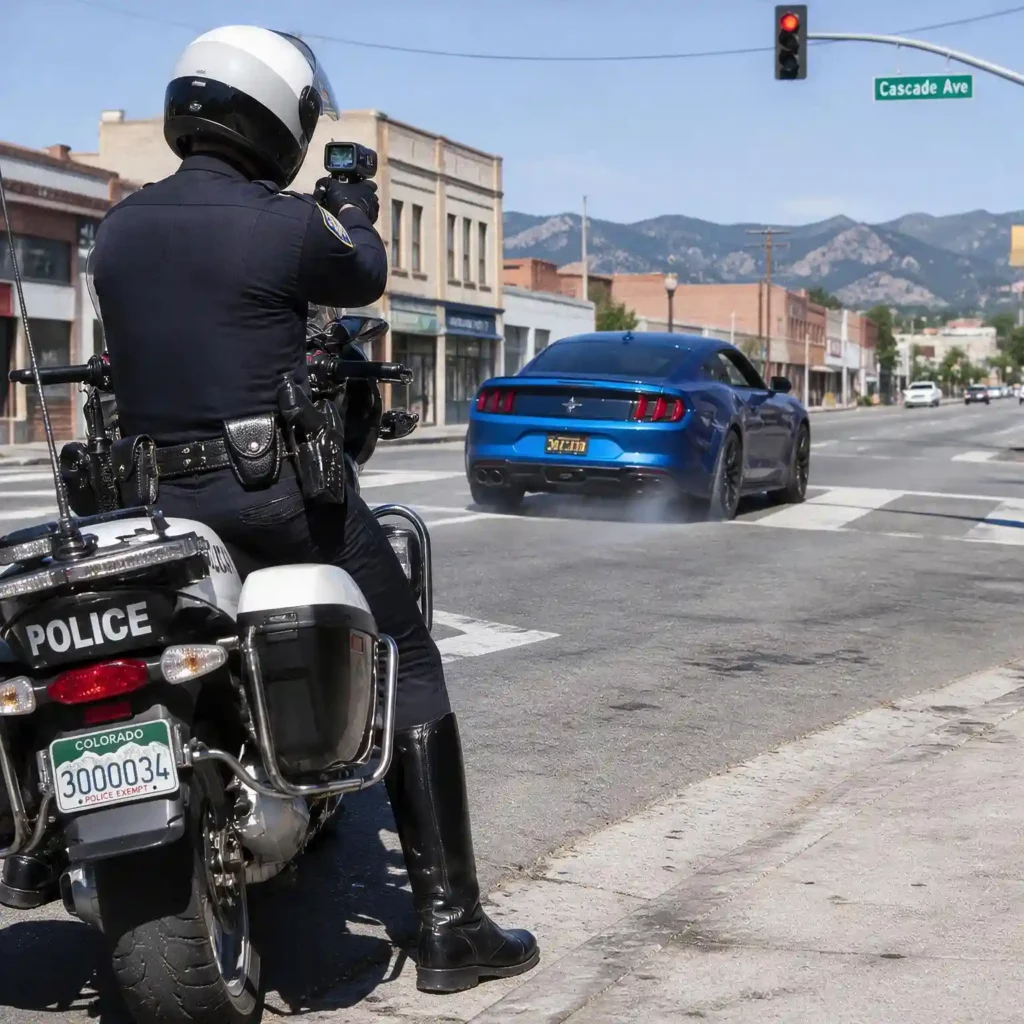
Is it worth hiring a traffic ticket lawyer in Colorado Springs? From this attorney’s perspective, the answer depends on what value the attorney brings to the traffic case.
An attorney’s negotiation skills and expertise can provide substantial value to the client through reduction of points or fine, avoiding jail or keeping your license. For some cases, however, the costs of hiring an attorney may not make sense because the penalties are so minor. Let’s review some situations where an experienced Colorado traffic attorney can provide substantial value and guidance,
As an example, if the ticket carries several points, threatens your license, involves an accident, affects a commercial driver’s license, or charges a misdemeanor traffic offense, the answer is often yes, it’s worth it. For a minor parking ticket or a low-level, no-point violation, hiring a lawyer may cost more than it saves.
I tell potential clients that the right answer depends on the charge, their driving history, and what is at risk. A four-point ticket may be manageable for one driver and may trigger a license suspension for another. A speeding citation can be a civil traffic infraction, while speeding 25 miles per hour or more over the limit can be charged as a misdemeanor traffic offense under C.R.S. § 42-4-1101.
Before you pay, find out what the payment will do to your record, your license, your insurance, and your job. Paying the ticket may be the right choice in your situation. It should be an informed choice.
Key Takeaways
- Paying a Colorado penalty assessment generally resolves the charge, but it also counts as a conviction for DMV purposes.
- A timely payment may reduce the points on some state penalty assessments. That does not erase the conviction.
- Colorado drivers age 21 and older may face a point suspension after 12 points in 12 months or 18 points in 24 months.
- Reckless driving and careless driving are misdemeanor traffic offenses, not ordinary civil traffic infractions.
- Driving under restraint is a class A traffic infraction in many cases, but an alcohol-related restraint can make it a class 2 misdemeanor traffic offense.
- CDL holders face federal anti-masking rules that can limit deferred judgments and diversion.
- No lawyer can promise a dismissal. A lawyer can identify defenses, negotiate when appropriate, and help you understand the consequences before you make a decision.
Do You Need a Traffic Ticket Lawyer in Colorado Springs?
You probably do not need to hire an attorney for every ticket. You should strongly consider at least a consultation when the ticket creates a risk you cannot afford to guess about.
This is of course a personal decision, but here is some guidance on when a traffic defense lawyer can provide the most value.
| Your situation | Is a lawyer usually worth considering? | Why it matters |
|---|---|---|
| Parking ticket or no-point violation | Usually no | The legal fee may exceed the likely benefit |
| One- or two-point ticket with a clean record | Maybe | Review the payment offer and insurance risk first |
| Four or more points | Yes | One conviction can move you much closer to a point suspension |
| Speeding 25 mph or more over the limit | Yes | Colorado treats it as a misdemeanor traffic offense |
| Careless or reckless driving | Yes | These are misdemeanor traffic offenses with possible criminal and licensing consequences |
| Accident involving injury or death | Yes | The charge and possible penalties become more serious |
| Driving under restraint, DARP, or habitual traffic offender issues | Yes | License extensions, disqualification, and criminal penalties may apply |
| CDL holder | Yes | Federal reporting and anti-masking rules can affect your livelihood |
| Out-of-state driver | Yes | A Colorado conviction may affect your home-state license, and travel may complicate court appearances |
| DUI, DWAI, hit-and-run, vehicular assault, or vehicular homicide | Contact a lawyer promptly | These cases can involve jail, license revocation, and separate DMV procedures |
If you are unsure which category applies, look at the statute or ordinance number on the citation. Also check the court address.
A ticket filed in Colorado Springs Municipal Court is handled differently from a state-law ticket filed in El Paso County Court. My guide on Colorado Springs Municipal Court and the El Paso County Courthouse explains the difference.
What Happens If You Pay a Colorado Traffic Ticket?
Paying a ticket is not simply paying a bill. Under C.R.S. § 42-2-127(6), acceptance and payment of a penalty assessment counts as a conviction for DMV purposes. The applicable points can then be assessed against your driving record.
There is an important detail that many articles leave out. For a qualifying state penalty assessment paid on time, the points assessed may be reduced. Municipalities may choose to apply a similar reduction to municipal tickets.
Read the ticket carefully because the offer, deadline, and rules depend on the citation and the court.
This creates a real decision:
- You can accept the stated disposition and any point reduction shown on the ticket.
- You can reject the offer and contest or negotiate the charge.
- You can ask a traffic ticket attorney to compare the offer with the defenses and likely outcomes in your case.
Do not reject a favorable penalty assessment without understanding what you may lose. Do not pay a serious ticket merely because the fine looks manageable.
How Many Points Can Suspend a Colorado Driver’s License?
For most Colorado drivers age 21 or older, the DMV may suspend a license after the driver accumulates:
- 12 or more points within 12 consecutive months
- 18 or more points within 24 consecutive months
Drivers under 21 have lower thresholds. Certain chauffeurs have different thresholds for points accumulated in the course of employment.
The calculation uses the date of each violation, although points are not assessed until there is a conviction. The Colorado Department of Revenue explains the current point-suspension process.
Common state-law point assessments include:
| Conviction | DMV points |
|---|---|
| Speeding 1 to 4 mph over | 0 |
| Speeding 5 to 9 mph over | 1 |
| Speeding 10 to 19 mph over | 4 |
| Speeding 20 to 39 mph over | 6 |
| Speeding 40 mph or more over | 12 |
| Careless driving | 4 |
| Careless driving resulting in death | 12 |
| Reckless driving | 8 |
These are the statutory point values before any qualifying reduction for timely payment of a penalty assessment. You can read a fuller explanation in my guide to Colorado driver’s license points.
What Are the Benefits of Hiring a Traffic Ticket Lawyer in Colorado Springs?
1. You Learn What’s at Stake Before Entering a Plea
The fine is only one part of the case. A conviction may add DMV points, move you toward a suspension, affect insurance pricing, create problems for a CDL, or appear in driving and court records.
A traffic attorney should start by identifying:
- The exact statute or municipal ordinance charged
- Whether the case is a civil traffic infraction or a misdemeanor traffic offense
- The original point value and any reduced-point offer
- Whether the charge requires a court appearance
- Whether the result could affect a CDL, job, professional license, immigration status, or out-of-state license
That review may confirm that paying the ticket is reasonable. It may also reveal other problems that are much more expensive than the stated fine.
2. You May Be Able to Reduce or Avoid DMV Points
A dismissal isn’t possible in every case. Depending on the evidence, driving history, charge, and court, a favorable result may include a reduction to a lower-point violation, a nonmoving violation, or another lawful resolution.
Colorado’s point system can make a reduction worth your while. Reducing an eight-point reckless driving charge to a four-point careless driving charge, for example, can make a major difference to a driver who already has points.
Whether that result is available depends on the facts and willingness of the prosecutor to extend the offer.
3. You Get an Independent Review of the Traffic Stop and Evidence
The citation contains the officer’s version of events, or simply put, they are only allegations. It rarely contains all the evidence.
Depending on the case, a case may have additional discovery available:
- Body-camera and dash-camera video
- Radar or lidar testing records and the foundation for the speed reading
- The officer’s observations
- Dispatch records, 911 calls, and witness statements
- Crash reports, photographs, diagrams, and vehicle data
- Road conditions, signs, sight lines, and speed-limit evidence
- Whether the officer had a lawful basis for the stop
Note: A clerical error does not automatically invalidate a citation. An officer’s absence at one court setting does not automatically require dismissal either. The question is whether the prosecution can prove the charge with admissible evidence.
4. A Lawyer Can Negotiate Based on the Facts and the Law
Prosecutors handle large traffic dockets. A useful negotiation gives them a legal or practical reason to change the charge or resolve a case to get it off their docket.
Remember, it would be impossible for a DA’s office to take every case to trial from a practical standpoint. They just don’t have the time or staff to try every case. It’s in their best interest to resolve cases to keep their dockets moving.
Reasons to reduce a ticket could include weak evidence, a clean driving history, proof that the driver corrected an equipment or license issue, documented mitigation, or a proposed resolution that fits the facts/situation.
Local experience helps an attorney understand filing practices, negotiation procedures, and what information a prosecutor or judge is likely to consider. It does not guarantee special treatment. The value comes from preparing the case and presenting the request in a form the court can use.
5. You May Protect Your License From a Point Suspension
Once your point total reaches the statutory threshold, the DMV can begin a separate suspension process. A lawyer may help in two places:
- In traffic court, by trying to prevent or reduce the conviction that adds the points
- At the DMV hearing, by reviewing the point calculation and requesting lawful driving privileges when available
A DMV point hearing is not a second trial on whether you committed the traffic offense. The traffic case must be addressed in court. That is why the result of the ticket matters before the point-suspension notice arrives.
6. You Get a Defense Suited to a Criminal Traffic Charge
Colorado distinguishes civil traffic infractions from misdemeanor traffic offenses. The difference matters.
Reckless driving is a class 2 misdemeanor traffic offense and carries eight points. Careless driving is also a class 2 misdemeanor traffic offense when it does not cause injury. It becomes a class 1 misdemeanor traffic offense when it proximately causes bodily injury, serious bodily injury, or death. Careless driving resulting in death carries 12 points.
Driving under restraint also requires careful classification. Under C.R.S. § 42-2-138, many non-alcohol-related cases are class A traffic infractions. Driving while restrained because of a DUI, DWAI, UDD, or certain alcohol-related administrative actions is a class 2 misdemeanor traffic offense. Knowledge of the restraint is an element, and the DMV may impose additional licensing consequences.
These charges need more analysis than a routine payment decision.
7. A Lawyer Can Address the Special Risk to CDL Holders
Commercial drivers should speak with a lawyer before paying almost any moving violation. A conviction in a personal vehicle can still matter to a CDL holder.
Federal law limits what states can do. 49 C.F.R. § 384.226 prohibits a state from masking a qualifying traffic conviction or using a deferred judgment or diversion program to keep it off the CDL record.
The rule applies to a CLP (commercial learner’s permit) or CDL holder driving any type of motor vehicle, subject to limited exceptions for parking, vehicle-weight, and vehicle-defect violations.
The lawyer must structure any resolution within federal and state reporting rules.
8. You May Avoid Unnecessary Court Trips
An attorney may be able to handle some routine settings without you, depending on the charge, court, and judge. Other proceedings may require your appearance. Trials and sentencing hearings often require the client to be present unless the court permits otherwise.
Never skip a court date because you assume a lawyer can appear for you. Confirm with your attorney which dates require your attendance. For an out-of-state driver or someone who cannot miss work, reducing unnecessary appearances can be a meaningful part of the representation.
9. Potential Financial Savings
The cost of a traffic case can include more than the fine:
- Court costs and surcharges
- Insurance consequences
- Lost work for court appearances
- License reinstatement expenses
- Transportation costs during a suspension
- Employment consequences for a professional or commercial driver
Insurance results vary by carrier, policy, violation, and driving history. No attorney can promise that a negotiated result will prevent a rate increase. A lawyer can help you compare the known legal risks with the fee for representation.
10. You Have Someone Responsible for the Deadlines and Case Strategy
Traffic cases move quickly. The citation may contain a payment deadline, an arraignment date, or both. A DUI or alcohol-related case may also involve a separate DMV deadline that is not controlled by the criminal court date.
Once retained, a lawyer can track court settings, request available evidence, communicate with the prosecutor, advise you about offers, and prepare for hearing or trial. You still make the final decision whether to accept a plea or proceed to trial.
Can a Traffic Ticket Lawyer Get the Ticket Dismissed?
Sometimes. That’s the goal, but it won’t happen in every case. A dismissal may be possible when the prosecution cannot prove an element, essential evidence is unavailable or inadmissible, the stop was unlawful, or another legal problem undermines the case. The prosecutor may also dismiss or amend a charge after reviewing evidence or mitigation.
Other possible outcomes include:
- A reduction to a lower-point charge
- A reduction from a misdemeanor traffic offense to a traffic infraction
- A plea to a nonmoving violation
- A deferred judgment, deferred prosecution, or diversion when authorized and available
- A negotiated sentence that limits the most serious consequences
- An acquittal at trial
Not every option is available in every court. Deferred outcomes can be restricted by the charge, local policy, driving history, and federal CDL rules. Any attorney who guarantees a dismissal before reviewing the citation and evidence is making a promise the attorney cannot responsibly make.
When Is Hiring a Traffic Lawyer Usually Worth the Cost?
Hiring a Colorado Springs traffic ticket attorney is usually worth serious consideration when:
- The ticket carries four or more points
- You are close to a DMV suspension threshold
- You were cited for speeding 25 mph or more over the limit
- You face reckless driving, careless driving, or an alcohol-related driving-under-restraint charge
- The allegation involves a crash, injury, or death
- You hold a CDL or drive for work
- You have prior traffic convictions or an existing license restraint
- You live outside Colorado and cannot easily attend court
- You believe the stop, speed reading, identification, or accident investigation is wrong
- A conviction could affect employment, military service, security clearance, or a professional license
For a low-level ticket with a favorable payment offer and no meaningful collateral risk, hiring counsel may not make financial sense. A free consultation can help you determine which type of case you have.
What Should You Do After Receiving a Traffic Ticket?
- Read every page of the citation. Identify the charge, points, payment offer, deadline, court date, and court location.
- Do not miss the deadline. Paying late or failing to appear can create additional problems. (If you want the reduction offered by early payment)
- Preserve evidence. Save dash-camera video, photographs, GPS data, repair records, witness names, and any messages related to the incident.
- Request your Colorado driving record if prior points may matter. Understanding how long a traffic ticket stays on your record can also help you determine whether an older violation could still affect you.
- Do not post about the stop or accident on social media.
- Speak with a lawyer before paying if the case involves several points, a misdemeanor traffic offense, a crash, a CDL, or a possible suspension.
Why Hire The McDowell Law Firm for a Colorado Springs Traffic Case?
I have practiced criminal and traffic law in Colorado since 2004. I began as a Deputy District Attorney in El Paso County’s Fourth Judicial District and have represented defendants in private practice since 2007. Traffic and DUI matters are a large part of our caseload, and we have experience handling all types of traffic charges at the State and Municipal court levels.
That experience helps me evaluate a traffic case from both sides. I look at what the prosecution must prove, what the evidence actually shows, and what result best protects the client’s license, record, work, and future.
Clients hire our firm for:
- More than 20 years of Colorado criminal and traffic law experience
- Former El Paso County prosecutor experience
- Regular work in Colorado Springs Municipal Court and El Paso County Court
- Personal review of the charge, evidence, driving history, and DMV exposure
- Clear advice about whether an offer is worth accepting
- Trial preparation when a reasonable resolution is not available
Our office is at 2 N. Cascade Avenue in downtown Colorado Springs, close to both local courthouses. We offer free consultations for Colorado Springs and El Paso County traffic cases. Learn more about our Colorado Springs traffic defense practice.
Call The McDowell Law Firm at 719-227-0022 before you pay the ticket. Bring or send us a clear copy of the citation. We can identify the charge, review the points and deadlines, and tell you whether hiring a traffic ticket lawyer is likely to make sense for your situation.
Frequently Asked Questions
1. Is hiring a traffic ticket lawyer in Colorado Springs worth it?
It often is when the ticket carries several points, threatens a suspension, charges a misdemeanor traffic offense, involves an accident, or affects a CDL.
It may not be worth the cost for a minor no-point violation. The best way to decide is to compare the ticket’s current offer with your driving history and the realistic alternatives. The real answer is: can we provide value? And is it worth it to the client to have an attorney in your corner?
2. Does paying a Colorado traffic ticket mean I am guilty?
Paying a penalty assessment generally resolves the charge and counts as a conviction for Colorado DMV purposes. On some qualifying state tickets, timely payment also reduces the assessed points. The conviction can still appear on your driving record.
3. Can a lawyer reduce the points on my speeding ticket?
A lawyer may negotiate for a lower-point charge or obtain a dismissal when the law and evidence support it. No result is guaranteed. The point value comes from the final conviction reported to the DMV, not from a lawyer directly removing points from the DMV record.
4. How many points is a speeding ticket in Colorado?
Under state law, speeding 1 to 4 mph over carries zero points, 5 to 9 mph over carries one point, 10 to 19 mph over carries four points, 20 to 39 mph over carries six points, and 40 mph or more over carries 12 points. A qualifying timely penalty-assessment payment may reduce the points shown on the citation.
5. Is speeding a crime in Colorado?
Speeding 1 to 24 mph over the applicable limit is generally a class A traffic infraction under state law. Speeding 25 mph or more over is a class 2 misdemeanor traffic offense. The same conduct in a designated construction or maintenance zone can be classified more seriously.
6. Is careless driving a criminal charge in Colorado?
Careless driving is a misdemeanor traffic offense under Colorado law. It is a class 2 misdemeanor traffic offense when no injury results. It is a class 1 misdemeanor traffic offense when the driving proximately causes bodily injury, serious bodily injury, or death.
7. Is reckless driving a criminal charge in Colorado?
Yes. Reckless driving is a class 2 misdemeanor traffic offense. It carries eight DMV points, and repeat convictions can carry increased penalties.
8. Will my ticket be dismissed if the officer does not appear?
Not automatically. The result depends on the type of hearing, the reason for the absence, the available evidence, and whether the court grants a continuance. Do not assume an officer’s absence at an early setting will end the case.
9. Can a traffic lawyer appear in court without me?
Sometimes. A lawyer may be permitted to handle certain routine settings without the client, but the court can require your presence. Confirm with your attorney before missing any scheduled appearance.
10. Can a traffic ticket affect my car insurance?
Yes. Insurers may consider traffic convictions when setting or renewing rates. The effect and duration depend on the carrier, policy, violation, and your driving history. A reduced charge does not guarantee that your premium will stay the same.
11. Can a lawyer keep a CDL ticket off my record?
Federal law generally prohibits states from masking qualifying traffic convictions for CDL and CLP holders. A lawyer can still challenge the evidence or negotiate a lawful reduction.
12. Does a traffic conviction decide who is at fault in a Colorado injury lawsuit?
Not by itself. Under C.R.S. § 42-4-1713, the record of a conviction for a state traffic-law violation is generally inadmissible in a civil action, subject to the statute’s exceptions. The crash, insurance claim, restitution issues, and civil case still require separate analysis.
13. What should I bring to a free traffic-ticket consultation?
Bring the citation, court paperwork, your driving record if available, photographs or video, the names of witnesses, and any documents showing why the ticket may affect your employment or license. Tell the lawyer about prior tickets, even if they occurred in another state.
Talk With a Colorado Springs Traffic Ticket Lawyer Before You Pay
The best time to understand a traffic ticket is before you accept a conviction. If your citation carries points, charges a misdemeanor traffic offense, involves a collision, or threatens your ability to drive for work, call The McDowell Law Firm at 719-227-0022 for a free consultation.
Every case is different. Past results do not guarantee a future outcome. This article provides general information about Colorado law and is not legal advice for a specific case. Traffic laws, court procedures, and DMV rules can change. Speak with a Colorado attorney about your citation and deadlines before making any decisions.