


Assault charges in Colorado Springs can derail your life fast. What starts as an argument, a bad night, or someone else’s exaggerated account can become a felony charge with real prison time attached to it. The stakes are not abstract.
We handle all types of assault cases, whether they are misdemeanor, felony or domestic violence. These differences are significant when it comes to the possible penalties and the way we defend them.
If you or someone you care about has been charged with assault, menacing, or a related violent crime anywhere in El Paso County, including Colorado Springs, Fountain, Manitou Springs, Monument, or on Fort Carson, Peterson Space Force Base, or Schriever Space Force Base, contact a Colorado Springs assault lawyer before you speak to law enforcement.
Assault charges in Colorado carry consequences that extend far beyond the courtroom. A conviction can mean prison time, significant fines, a permanent felony record, loss of your right to own a firearm, and consequences for your immigration status, your professional license, and your career.
If the charge is tagged as a domestic violence offense, the fallout is even more severe. The stakes are too high to navigate this alone.
Colorado prosecutors in El Paso County take assault charges seriously. The District Attorney’s Office has experienced trial attorneys, law enforcement resources, and the time to build a case against you.
If you appear in court without a skilled defense attorney, you are stepping onto a battlefield where the other side has already been preparing.
The charges filed against you are not the entire story. They represent the prosecution’s opening position, not a guaranteed outcome. Evidence can be challenged. Witness accounts can be scrutinized. Lawful defenses, including self-defense and defense of others under C.R.S. 18-1-704, can be raised and pursued aggressively.
But none of that happens on its own. It requires a defense lawyer who knows how Colorado assault law works, how the 4th Judicial District operates, and how to build a case that creates real doubt.
A local Colorado Springs assault defense attorney also understands the formal and informal dynamics of the courthouse. That local knowledge matters, and it is something a lawyer hired from outside the area simply will not have.
You also need an attorney who understands the unique pressures facing the military community. Fort Carson, Peterson Space Force Base, and Schriever Space Force Base bring thousands of service members and their families to the Colorado Springs area.
An assault conviction creates federal firearms consequences under 18 U.S.C. 922(g)(9) that can end a military career instantly. If you are an active-duty service member or veteran, the collateral consequences of a conviction are not just significant, they can be permanent. I understand this community and I handle these cases with that reality in mind.
Every statement you make can be used against you. Get legal guidance first.
Trustindex verifies that the original source of the review is Google. Couldnt recommend Josh enough, he did a fantastic job with my case and got all charges dismissed!Posted on GoogleTrustindex verifies that the original source of the review is Google. Josh helped me with a defense case and he did an amazing job! He was extremely knowledgeable throughout the entire process. Josh was also very attentive to my desired outcome of the case and achieved the best results for my situation. If you have any legal needs, you need Josh on your side!Posted on GoogleTrustindex verifies that the original source of the review is Google. I cannot speak highly enough of our lawyer Josh McDowell’s exceptional handling of what could have been a very stressful and unfair situation. Our case centered on a baseless misdemeanor charge of disorderly conduct leveled at us, which falsely accused us of harassment and trespassing in an attempt to secure a restraining order. Despite the DA showing an initial inclination to credit the plaintiff's exaggerated claims, Josh remained steadfast and meticulous in dismantling the opposing narrative with clear, compelling evidence and persuasive arguments. From the outset, Josh demonstrated outstanding diligence, thoroughly investigating every detail, preparing airtight documentation, and effectively communicating with the District Attorney's office. His persistence and skill ultimately convinced the DA to dismiss the case entirely, sparing us the ordeal of a prolonged legal battle and protecting our reputation from these allegations. We are deeply grateful for his professionalism, strategic approach, and unwavering commitment to achieving the best possible outcome. I would highly recommend the McDowell Law firm in Colorado Springs to anyone seeming legal representation.Posted on GoogleTrustindex verifies that the original source of the review is Google. exceptional lawyerPosted on GoogleTrustindex verifies that the original source of the review is Google. Josh McDowell is a phenomenal lawyer. I don't think I can fully express how grateful I am for everything Josh did for me. From the very beginning, he treated my case with genuine care and made me feel heard, supported, and protected during one of the most stressful times of my life. His dedication, thoroughness, and compassion were clear in every conversation we had. He never made me feel like just another client--he made me feel like my situation truly mattered. Josh took the time to walk me through every step, always explaining things in a way I could understand and answering all of my questions with patience and kindness. He worked tirelessly behind the scenes, and knowing he was fighting for me gave me so much peace of mind. Because of his skill and commitment, my case was ultimately dismissed--something I will forever be thankful for. If you're looking for an attorney who not only excels at what he does but genuinely cares about the people he represents, I wholeheartedly recommend Josh and his amazing assistant, Genesis. Their support, professionalism, and kindness made all the difference.Posted on GoogleTrustindex verifies that the original source of the review is Google. You can trust Josh to do everything possible for good results. For my daughter’s case, Josh kept us up to date during the whole process and was able to get the case dismissed after gathering much evidence.Posted on GoogleTrustindex verifies that the original source of the review is Google. Working with the McDowell Law Firm was a very pleasant experience. They helped me navigate the insurance companies and got me a great payout after a bad car accident! They were friendly and responsive and always made me feel heard, I would recommend them if you’re looking for a firm that offers a quality experience and great results!Posted on GoogleTrustindex verifies that the original source of the review is Google. Mr. McDowell, was amazing. He is an attorney with great skills and great knowledge, helping the client in so many ways. He has helped me out incredibly and is 100% definitely someone that I would recommend going to for help! Great attorney and person all around!Posted on GoogleTrustindex verifies that the original source of the review is Google. I had the pleasure of working with Joshua McDowell and his team at The McDowell Law Firm, and they are top-notch. With over 20 years of experience, Joshua’s expertise in criminal defense and personal injury law is evident. The firm provides personalized, compassionate service and truly goes above and beyond for clients. Highly recommend if you're in need of a skilled and dedicated attorney in Colorado Springs!Posted on GoogleTrustindex verifies that the original source of the review is Google. Mr. McDowell is very confident and highly knowledgeable. I'd say he's the defense you'd need.
There is no single approach that works for every assault case. The facts, the evidence, the charging decisions, and the client’s goals all shape the strategy.
The first thing I do is review every document and piece of information related to your case. That means the arrest report, the charging documents, witness statements taken by law enforcement, any audio or video recorded at the scene, and any prior criminal history that may affect charging or sentencing.
I also listen carefully to your account of what happened. In my experience, the version of events in the police report often tells only part of the story, and frequently gets it wrong.
I look at whether the facts support the charge as filed, whether the prosecution can actually prove every element beyond a reasonable doubt, and whether any defenses exist on the face of the record. This early evaluation shapes everything that follows.
Evidence is the backbone of any assault prosecution, and it is also where many cases fall apart on cross-examination. I examine every piece of evidence the prosecution intends to use, asking not just what it shows, but how it was obtained, how it was preserved, and whether it actually proves what the prosecution claims.
Security footage gets reviewed. Medical records get scrutinized for consistency with the alleged mechanism of injury. Photographs of alleged injuries are analyzed for timing and causation. Toxicology reports, when they exist, are evaluated for reliability.
If any evidence was obtained through an unlawful search or seizure in violation of the Fourth Amendment or Article II, Section 7 of the Colorado Constitution, I can file to suppress it.
Witnesses are often the most powerful evidence in an assault case, and also the most unreliable. Memory is imperfect. Perception is shaped by stress, distance, lighting, and bias. Prior statements made to police may be inconsistent with what a witness says months later at trial.
Once I have a complete picture of the evidence and witnesses, I build a defense strategy tailored to your specific case. In some situations, the strongest defense is a complete denial, presenting a competing narrative supported by evidence that creates reasonable doubt. In other situations, the strategy centers on a lawful justification defense, such as self-defense, defense of others, or defense of premises.
The sooner you act, the stronger your defense.
Colorado law allows reasonable force to prevent imminent unlawful bodily harm. Initial aggressor status can complicate the defense but does not always bar it if circumstances change or withdrawal occurs.
Reasonable force may be used to protect another person from unlawful force.
Cases involving mutual physical confrontation require careful analysis of who escalated and whether force was proportional.
The prosecution must prove the required level of injury beyond a reasonable doubt.
Many assault cases depend on conflicting accounts and require careful cross-examination and investigation.
Unlawful searches or improperly obtained statements may result in suppression of evidence.
Our client was arrested for third degree assault, harassment, and child abuse following an accusation of assaulting his longtime girlfriend in front of children. We had all charges dropped before trial and the case sealed.
Our client was charged with two counts of first degree assault, and telephone obstruction in a domestic violence case. The jury found him not guilty of all charges following a full trial. The case was sealed.
Our client was charged with first degree assault after stabbing another individual with a knife. We showed the court that our client’s actions were justified in self-defense, resulting in the dismissal of all charges.
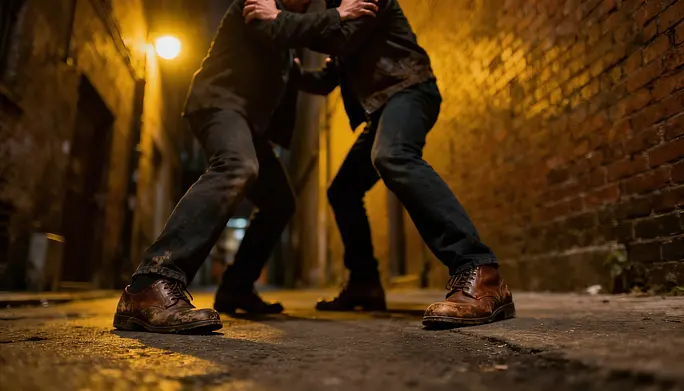
The actions you take immediately after an assault arrest in Colorado Springs can significantly affect the outcome of your case. Here is what I tell every client.
under the Fifth Amendment. Exercise it. Even if you believe you did nothing wrong, even if you want to explain what happened, do not speak to detectives or officers without an attorney present. Statements made after an arrest are frequently used against defendants in ways they never anticipated. The time to tell your side of the story is when your attorney has prepared the proper forum for it, not in an interrogation room at two in the morning.
If a protection order has been issued, any contact is a separate criminal offense. Even if no formal order exists, reaching out to the alleged victim can be interpreted as witness tampering and can be used against you. Let your attorney handle communication strategy.
Anything you post about the incident, the alleged victim, or your case can be screenshot, subpoenaed, and used as evidence against you. Lock down your social media accounts and say nothing publicly.
Write down every detail you can recall about the incident while your memory is fresh. Where were you? Who else was present? What was said? What did the alleged victim do before, during, and after the incident? What injuries, if any, did you sustain? This information is critical for your defense and the sooner it is captured, the more accurate it will be.
If you have photographs, text messages, voicemails, or any other evidence relevant to the incident, do not delete it. Send it to your attorney as soon as possible. Evidence has a way of disappearing or becoming unavailable as time passes.
The earlier I get involved in your case, the more options, and time, we have. Call McDowell Law Firm at 719-227-0022 as soon as possible.
A judge advises the defendant of charges, sets bond, and issues a protection order in domestic violence cases.
In felony crime of violence cases the prosecution must establish probable cause if a defendant proceeds to a preliminary hearing. Deciding to go to a preliminary hearing or not, is a major decision, and should be made with counsel.
Some cases resolve through plea negotiations, diversion, or deferred sentencing depending on criminal history and injury severity.
If a case cannot be disposed of through a plea or a dismissal, the case will proceed to trial. Self-defense or mistaken identity claims may be presented to a jury when supported by evidence.
Colorado does not have a separate crime called battery. That distinction matters. What other states call battery, Colorado prosecutes as assault.
Colorado law defines assault under C.R.S. Title 18, Article 3 and divides it into three degrees based on severity, intent, and circumstances.
The degree of the charge controls whether you face a misdemeanor or a felony, and it determines your sentencing range if convicted.
Understanding which statute applies to your case is the starting point for building your defense.
The Three Degrees of Assault in Colorado:
Third degree assault is the least serious assault offense but remains a Class 1 misdemeanor classified as an extraordinary risk crime.
A person commits third degree assault if they knowingly or recklessly cause bodily injury to another person, or cause bodily injury through criminal negligence with a deadly weapon.
Bodily injury under Colorado law includes physical pain, illness, or any impairment of physical or mental condition. Visible injury is not required.
Common fact patterns include:
Penalty:
Up to 18 months in county jail and up to 1,000 dollars in fines. The extraordinary risk designation increases the maximum jail sentence beyond the normal 364 day limit for most Class 1 misdemeanors.
Second degree assault is a Class 4 felony covering a wide range of conduct. A person may commit second degree assault by:
Even relatively minor bodily injury can support a felony charge when the alleged victim is a protected emergency worker.
Penalty:
Two to six years in the Department of Corrections and three years mandatory parole.
If charged as a crime of violence under C.R.S. 18-1.3-406, the sentencing range increases to five to sixteen years and probation is typically unavailable.
First degree assault is the most serious assault offense in Colorado. It is a Class 3 felony and is frequently charged as a crime of violence.
A person commits first degree assault when they:
Serious bodily injury means injury involving substantial risk of death, permanent disfigurement, or protracted loss or impairment of a body part or organ.
Penalty:
Four to twelve years in prison followed by five years mandatory parole.
If designated a crime of violence, the sentencing range increases to ten to thirty two years.
Menacing is a separate offense from assault. A person commits menacing if, by threat or physical action, he or she knowingly places or attempts to place another person in fear of imminent serious bodily injury. Physical contact is not required.
Menacing is a class 1 misdemeanor. It becomes a class 5 felony if committed by use of a firearm, knife, or bludgeon, or a simulated firearm, knife, or bludgeon.
Domestic violence is not a separate stand-alone charge in Colorado. It is a sentence enhancer and case designation that applies when the underlying facts involve an act or threatened act of violence against a current or former intimate partner.
A domestic violence designation can bring major added consequences, including mandatory protection orders, domestic violence treatment, federal firearm restrictions, and effects on military service, immigration status, and family law proceedings.
Prosecutors are already building a case. Shouldn’t you be doing the same?

Understanding what the prosecution will use to build its case is the first step toward building your defense.
Assault cases in Colorado Springs typically rely on some combination of the following types of evidence.
The alleged victim’s account is almost always the centerpiece of an assault prosecution. Prosecutors will present it through direct testimony at trial, but it begins with a statement made to law enforcement at or near the time of the incident. Victim statements are also among the most susceptible to challenge. Memory is fallible, perception is influenced by stress and intoxication, and prior inconsistent statements can significantly undermine credibility.
Bystanders, neighbors, coworkers, and others present at the scene may be interviewed by police. Their accounts may support or contradict the victim’s version of events. Independent witnesses who have no relationship to either party can carry significant weight with a jury.
This includes photographs of injuries, photographs of the scene, weapons or objects alleged to have been used, and any physical evidence collected at the scene. The prosecution will use physical evidence to corroborate the alleged victim’s account and to establish the severity of any injury.
Medical records documenting injuries are frequently introduced to establish that the victim suffered bodily injury or serious bodily injury as required under the relevant statute. These records can also be scrutinized for inconsistencies, for whether the described injuries are consistent with the alleged mechanism, and for alternative explanations.
Security camera footage, body camera footage from responding officers, doorbell cameras, and cell phone video recorded by bystanders are increasingly common in assault prosecutions. Video evidence can be powerful, but context matters. What the camera shows and what the camera does not show are both relevant.
911 calls, police dispatch recordings, and recorded law enforcement interviews all become part of the evidentiary record. Statements made by the alleged victim in the immediate aftermath of an incident can be introduced as excited utterances and may carry significant weight even without live testimony.
Under certain circumstances and with proper court authorization, the prosecution may seek to introduce evidence of prior incidents or prior convictions to establish a pattern of conduct. This is particularly common in domestic violence cases. Challenges to this type of evidence can be one of the most important pretrial battles in an assault case.
Text messages, social media posts, emails, and other digital communications are frequently sought in assault cases, particularly where the parties have an existing relationship. Messages threatening violence, messages discussing the incident, or messages that contradict a defendant’s claimed version of events can all be used by the prosecution.
We offer flat fees for most assault defense cases, so you know your total cost from the beginning. The fee depends on the severity of the charge, the amount of litigation involved, and whether the case requires trial preparation.
Third-degree assault cases and misdemeanor cases generally carry lower flat fees than felony assault cases. I provide a clear, written fee agreement before we begin. No surprises.
Consultations are free. Call 719-227-0022 or reach out through the website to schedule your evaluation today.
The most useful thing about Josh’s prosecutorial background is not just that he knows the law. It is that he knows how prosecutors are trained. He knows what evidence the DA’s office weighs most heavily, what kinds of cases they are more willing to negotiate and which ones they are not, and what arguments land with El Paso County prosecutors versus what gets dismissed.
He also knows what mistakes prosecutors make in these cases, and he looks for them in every case he handles. Charging decisions made too quickly based on a one-sided police report. Damage valuations or injury characterizations that do not hold up under scrutiny. Constitutional violations that got overlooked in the initial investigation. These are the things that change outcomes, and finding them requires someone who has been on both sides.
Josh handles every case at this firm personally. He does not hand clients off to associates or paralegals after the initial meeting.
When something happens in your case, he is the one who calls you. When you have a question, he is the one who answers it. When you are in court, he is the one standing next to you.
That level of personal attention is not universal in criminal defense. Many larger firms handle volume through delegation, which means the person who met you at intake is not the person doing the work on your case.
At the McDowell Law Firm, the attorney you hire is the attorney who handles your case from beginning to end.
Josh’s results in criminal defense cases in Colorado Springs have included dismissals of charges that looked strong on paper, charge reductions from felony to misdemeanor that preserved clients’ futures and records, acquittals at trial in cases where the prosecution had what appeared to be compelling evidence, and diversion outcomes that allowed clients to avoid convictions entirely.
He has handled cases that received significant media attention, including a jury acquittal in a theft case tied to what was described as the largest criminal investigation in the history of the Army’s Criminal Investigation Command, a case that was later featured on CBS’s 60 Minutes. He has had cases that make national or international news. This kind of high-stakes, high-profile defense experience reflects both his courtroom ability and his composure under pressure.
Josh serves clients throughout El Paso County, including Colorado Springs, Monument, Fountain, Manitou Springs, and surrounding communities. A significant portion of his practice involves clients from Fort Carson, Peterson Space Force Base, and Schriever Space Force Base, where assault and domestic violence charges carry particularly high stakes for military careers, security clearances, and benefits. He understands the specific consequences that service members face and fights for them with that full picture in mind.
If you have been charged with assault in Colorado Springs or El Paso County, do not give a statement to police before speaking with an attorney. Call The McDowell Law Firm at 719-227-0022. Anything you say will be used against you. We offer free consultations and are available to clients on Fort Carson, Peterson Space Force Base, and Schriever Space Force Base.
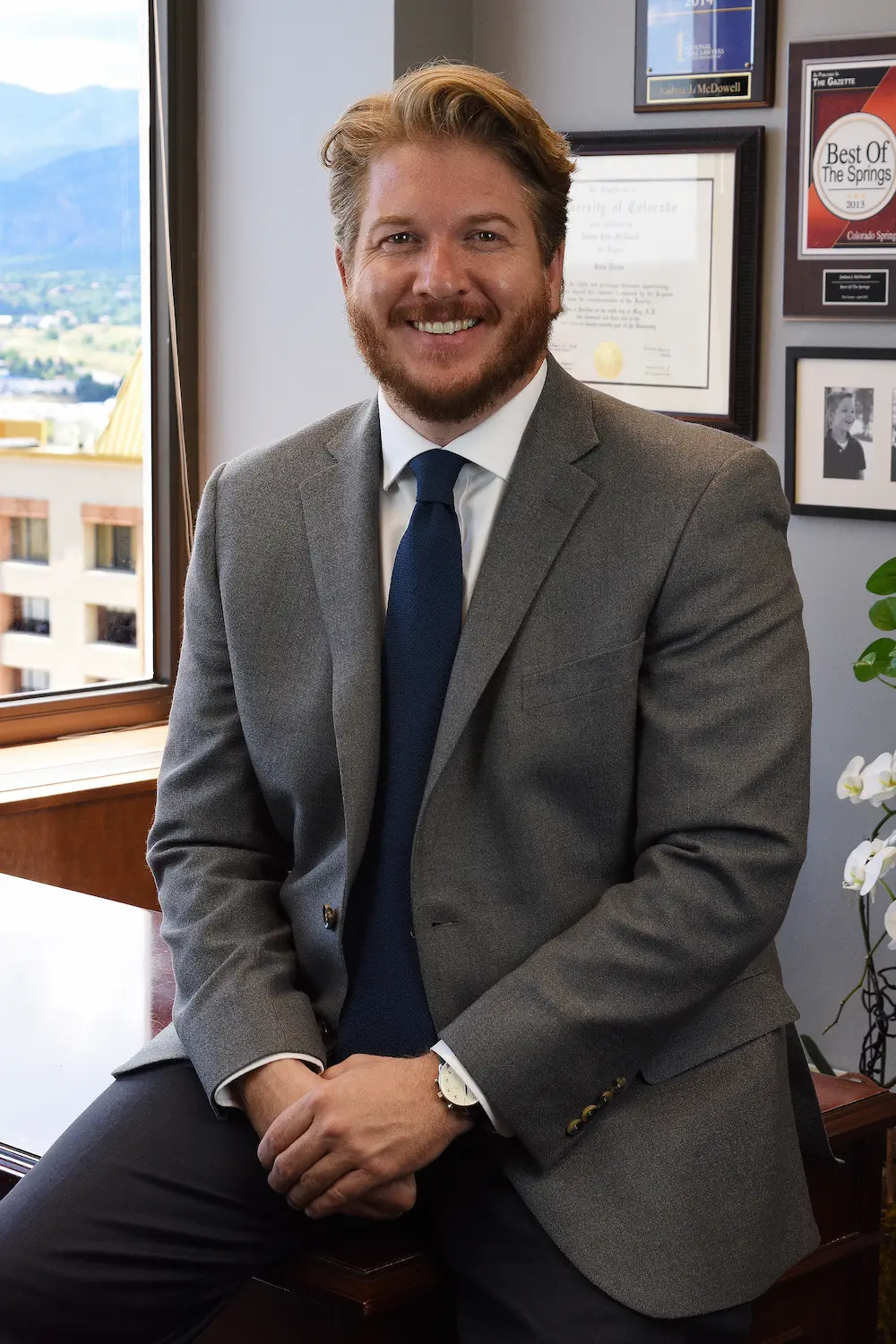
Josh has been working as a prosecutor (2004-2007) or as a defense attorney (since 2007) in El Paso County Courts for over 20 years. He has handled cases with domestic violence enhancements, cases involving disputed consent, cases where the identity of the person who committed the alleged conduct was genuinely at issue, and cases where the critical fight was over whether the conduct met the legal definition of the crime at all.








Stop talking to law enforcement. Do not make any statement without an attorney present. Do not contact the alleged victim. Preserve any evidence you have, including text messages, photographs, or witness contact information. Write down everything you remember about the incident while it is fresh. Then call a Colorado Springs assault defense attorney as quickly as possible.
The decisions made in the first hours after an arrest can significantly affect the outcome of your case.
The consequences depend on the severity of the charge, but a conviction for assault in Colorado can result in incarceration, fines, mandatory parole, a permanent criminal record, loss of your right to own or possess a firearm, professional license consequences in fields such as healthcare, law, or education, immigration consequences for non-citizens, and difficulties with housing and employment. Felony assault convictions are generally not eligible for record sealing. This is why fighting the charge aggressively from the beginning matters so much.
Assault under C.R.S. 18-3-202 through 18-3-204 requires that the defendant actually cause bodily injury or attempt to cause injury through a knowing or reckless act. Menacing under C.R.S. 18-3-206, on the other hand, does not require any physical contact. Menacing is charged when a person, through threat or physical action, knowingly places or attempts to place another person in fear of imminent serious bodily injury. Felony menacing involves the use or threatened use of a deadly weapon and is a Class 5 felony. The two charges are related but distinct, and it is not uncommon for both to be filed arising from the same incident.
Third-degree assault under C.R.S. 18-3-204 is a Class 1 misdemeanor and is classified as an extraordinary risk crime, which raises the maximum sentence from 364 days to 18 months in jail. It is not a felony. However, do not underestimate it. A conviction carries up to 18 months in jail, up to two years of probation, fines, and a criminal record. It is also commonly charged alongside more serious offenses, and the collateral consequences of any assault conviction can be significant.
Under C.R.S. 18-1-901(3)(p), serious bodily injury means bodily injury which, either at the time of the actual injury or at a later time, involves a substantial risk of death, a substantial risk of serious permanent disfigurement, a substantial risk of protracted loss or impairment of the function of any part or organ of the body, or breaks, fractures, or burns of the second or third degree. The distinction between bodily injury and serious bodily injury matters because it is the dividing line between second and first degree assault in many charging scenarios, with dramatically different sentencing consequences.
It depends on the complexity of the case and the charges involved. A misdemeanor assault case may move through the system in a matter of months. A felony assault case, particularly one headed for trial, can take several months to over a year from arrest to resolution. Court scheduling, discovery timelines, motions practice, and caseload in the 4th Judicial District all factor into the timeline. I keep clients informed at every stage and explain what to expect as the case moves forward.
Felony assault charges are handled in El Paso County District Court in the 4th Judicial District, located at 270 S. Tejon St. in Colorado Springs. Misdemeanor assault charges may be handled in El Paso County Combined Court. If the incident occurred in Teller County, cases are heard in the Teller County courthouse in Cripple Creek, also part of the 4th Judicial District. McDowell Law Firm regularly practices in both courthouses.
Yes, and in two distinct ways. First, any felony conviction in Colorado results in the loss of your right to possess firearms under both Colorado law and 18 U.S.C. 922(g)(1). Second, even a misdemeanor assault conviction qualifies as a misdemeanor crime of domestic violence under 18 U.S.C. 922(g)(9) if the incident involved a domestic relationship, which triggers a federal lifetime firearms prohibition. For active-duty military and law enforcement, this consequence alone can end a career. Understanding and fighting these consequences is a central part of what I do in assault defense cases.
An arrest alone will appear on many background checks, even without a conviction. A conviction will appear unless and until the record is sealed. In Colorado, felony assault convictions are generally not eligible for sealing. Misdemeanor assault convictions may become eligible for sealing after a waiting period under C.R.S. 24-72-705, depending on the offense and the sentence imposed. Charges that are dismissed or result in an acquittal become eligible for sealing sooner. Avoiding a conviction in the first place is the best way to protect your record.
As soon as possible. Ideally, before you make any statement to law enforcement, but if that moment has already passed, call an attorney today. Early involvement gives your attorney the opportunity to influence charging decisions before they are finalized, to preserve evidence that may be favorable to your defense, and to advise you on what to avoid saying or doing in the days following your arrest. Waiting to hire an attorney until your first court date means losing ground that may never be recovered. Call McDowell Law Firm at 719-227-0022 the moment you know you are facing an assault charge in Colorado Springs.
Yes. Third degree assault requires only bodily injury such as pain or bruising.
No. Charging decisions belong to the District Attorney.
Not always. Some misdemeanor cases may qualify for probation or deferred sentencing. Keep in mind, jail is always possible on any assault case. Whether jail is probable depends on many factors including criminal history, injuries, domestic violence-related and whether a weapon was used.
Yes, it certainly can. Civilian convictions can affect security clearances, promotion eligibility, and continued service depending on command and administrative review. A DV conviction or felony will affect your ability to possess a weapon.