
Whether you’re applying for a new job, renting an apartment, or seeking professional licensure, the prospect of a background check can raise questions and concerns.
What exactly will show up when someone runs a check on you? Understanding what information appears on background checks, and what doesn’t can help you prepare for these screenings and address any concerns proactively.
Background checks have become standard practice across many industries and situations. While they serve important purposes for employers and organizations, they can also feel invasive and stressful for the people being screened. The good news is that background checks follow specific rules and limitations, and knowing what to expect can help ease your concerns.
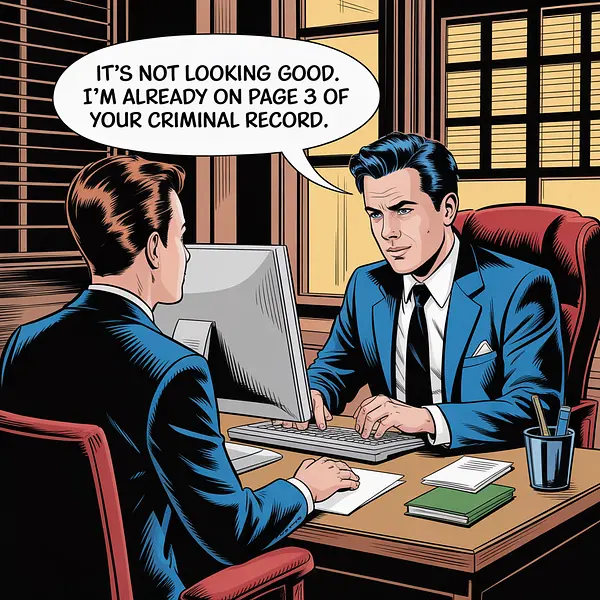
What Appears on Criminal Background Checks
- Criminal background checks are among the most common types of screenings, and they typically reveal a variety of information about your interactions with the criminal justice system.
- Most background checks will show both felony and misdemeanor convictions, along with details about the charges, disposition, and sentencing.
- Background checks typically include arrest records with dates and charges, court records showing the entire case history, any active warrants, conviction details with sentencing information, and records of time served in correctional facilities.
- When a background check company searches criminal records, they’re pulling information from various sources. County-level searches are considered the most accurate because most criminal prosecutions occur in municipal or county courts. More comprehensive checks may also search state databases and federal court records.
- It’s important to understand that even arrests that didn’t lead to convictions can appear on background checks. This often surprises people who assumed that being found not guilty or having charges dropped would erase the incident from their record entirely. The reality is more nuanced.
Related: Will a DUI Show Up on My Background Check?
Commercial Background Checks vs. NCIC
A common misconception is that employers and landlords have access to the FBI’s National Crime Information Center database. In reality, commercial background checks and law enforcement databases operate very differently.
The NCIC is maintained by the FBI and contains comprehensive information on criminal records, wanted persons, fugitives with active warrants, missing persons, and stolen property. However, access to the NCIC is strictly restricted to law enforcement agencies, certain government entities, and organizations specifically authorized by law. Commercial background check companies and private employers cannot search the NCIC database.
Instead, commercial background check providers compile their own databases by gathering information from various public sources. These sources include county court records, state criminal repositories, sex offender registries, federal court records, and other publicly available information.
Each background check company maintains its own database, which means two different companies might have access to different information depending on which sources they’ve compiled.
This is why there’s no truly comprehensive national criminal database available to private employers. The information in commercial databases depends entirely on which records the company has purchased and compiled. Some commercial databases are more thorough than others, but none have the complete access that law enforcement agencies have through the NCIC.
For most employment and housing screenings, commercial background checks rely heavily on county-level court searches combined with multi-jurisdictional database searches.
While these searches are generally thorough, they may not capture every criminal record, especially recent arrests that haven’t yet been entered into public databases or records from jurisdictions the company hasn’t compiled into their system.
Dismissed and Pending Charges
One of the most common questions people have is whether dismissed charges will appear on their background check. Unfortunately, the answer is often yes. Dismissed charges typically appear on most background checks because they represent formal criminal indictments, even though they didn’t lead to convictions.
When charges are dismissed, it means the prosecution or court decided not to pursue the case further. This could happen for many reasons, including lack of evidence, procedural errors, or successful completion of diversion programs. While individuals are not legally guilty when charges are dismissed, the arrest and court proceedings still create a record.
Pending charges also appear on background checks in most cases. If you’re currently facing criminal charges that haven’t been resolved, those charges will likely show up along with their current status.
This can create challenges for job seekers or others undergoing screening. Even though the presumption of innocence remains in court, employers may not feel the same or consider you too big a risk.
The critical distinction is that dismissed charges should show as dismissed rather than as convictions. A reputable background check will clearly indicate the disposition of each charge.
However, it can take time for court systems and law enforcement agencies to update their records after charges are dismissed, which means recent dismissals might not immediately reflect the updated status.
The Difference Between Juvenile and Adult Records
One of the most significant distinctions in criminal background checks involves records from when you were a minor. Juvenile records are treated very differently from adult criminal records, reflecting the belief that young people deserve opportunities for rehabilitation without lifelong consequences.
Criminal background checks usually don’t report juvenile offenses, as juvenile records are typically sealed from public disclosure.
In many jurisdictions, juvenile records can be sealed or expunged when the individual turns eighteen, and in some places this happens automatically. In Colorado, we use the term “expunged” for juvenile cases.
When juvenile records are sealed, they don’t appear on standard background checks, so employers cannot see them. This protection allows individuals to move forward from mistakes made as minors without those incidents affecting their adult opportunities.
However, juvenile record confidentiality isn’t absolute. Certain positions working with children, seniors, vulnerable populations, or requiring high security clearances may allow access to juvenile records through specialized background checks.
Level 2 background screenings, used for positions involving vulnerable populations, can reveal records that have been sealed by courts, including certain juvenile convictions.
The treatment of juvenile records varies significantly by state. Some states feature automatic expungement filing for juvenile offenders, while others require individuals to submit applications independently. The severity of the juvenile offense also matters, as more serious juvenile offenses are more likely to remain on records for longer periods.
Once a juvenile record is expunged, it will be completely sealed and will not be visible on background checks. Former juvenile offenders with expunged records can legally state on applications that they’ve never been arrested or adjudicated delinquent for those offenses.
What Won’t Show Up: Sealed and Expunged Records
Perhaps the most important thing to understand about background checks is that sealed and expunged records should not appear. Criminal convictions that have been expunged or sealed should never show up on background checks.
Expungement and sealing are legal processes that remove or restrict access to criminal records. When a record is expunged, it’s essentially erased from existence for most purposes. When a record is sealed, it still exists but is hidden from public view and most background check companies.
If you’ve successfully petitioned the court to expunge or seal records, those cases should not appear on standard employment background checks.
However, even after sealing, certain government agencies and courts can access sealed records for specific purposes, though they shouldn’t show up on typical background checks.
If you are applying to certain high-level government positions, there is a chance that even a sealed offense/record could appear.
If you are applying for a job that you expect will have a more extensive background check, be prepared to discuss the charge.
If it is sealed, that means it was likely dismissed, so you could discuss how and why the case was dismissed and sealed.
Were you wrongfully accused? Did the prosecutor drop the charges after additional investigation?
The key is ensuring that the expungement or sealing process was completed properly and that all relevant agencies have updated their records. If sealed or expunged records do appear on a background check, it may indicate an error that needs to be corrected.
Time Limitations on Reporting
Background checks don’t extend infinitely into the past. Federal and state laws impose limitations on how far back certain information can be reported.
In several states, including California, Kansas, Massachusetts, Maryland, Montana, New Hampshire, New York, and Washington, it’s illegal for background check companies to report convictions that are more than seven years old. This “seven-year rule” provides some relief for individuals with older convictions who have moved on with their lives.
The Fair Credit Reporting Act establishes federal guidelines as well. Under federal law, arrests that didn’t lead to convictions are generally reportable for up to seven years, while convictions can often be reported indefinitely unless state law provides otherwise. Under the FCRA, civil judgments and lawsuits can also be reported, but they are bound by the seven-year rule as well.
These time limitations don’t apply universally to all positions. Certain regulated industries or positions with higher security requirements may have access to more comprehensive background information regardless of age.
Beyond Criminal History
While criminal records are usually the number one concern about background checks, these screenings often include other types of information as well. Background checks may include employment and education verification, driving records, professional license verification, and even credit reports for certain positions.
Employment verification confirms your work history, including job titles, dates of employment, and sometimes salary information.
Education verification checks the degrees and credentials you’ve claimed. For positions involving driving, motor vehicle records will show your driving history, including tickets and license suspensions. For example, CDL drivers, taxi drivers, and chauffeurs can expect that their DMV records will be pulled by prospective employers.
For positions in financial services or other roles handling money, credit checks may be part of the background screening process. These checks reveal your credit history, outstanding debts, and financial responsibility patterns. This is also true for many government positions and jobs that require high trust.
Preparing for Background Checks
I understand that applying for a job is a high-stress situation. But being worried about your history and what might show up can be nerve-racking. Understanding what will appear on your background check allows you to prepare appropriately.
If you know you have a criminal record, it might be a good idea to run your own background check before potential employers do. This gives you a chance to see exactly what shows up and address any inaccuracies.
If dismissed charges or old arrests appear on your record, you may be able to take legal action to have them sealed or expunged. Consulting with a criminal defense attorney can help you understand your options for cleaning up your record. I handle sealings and expungements on cases that weren’t automatically sealed by the court. Under new Colorado laws, it is much easier to seal a case. Additionally, more cases are eligible for sealing.
When filling out job applications or other forms, answer honestly and accurately. If a question asks about convictions and your charges were dismissed, you typically don’t need to disclose them, but read the question carefully, as some applications ask about arrests or charges regardless of disposition. When in doubt, discuss with a criminal defense attorney near you regarding what should be disclosed in your situation.
Remember: Most of all, be prepared to discuss anything that appears on your background check. Having a clear, honest explanation ready, especially one that emphasizes what you’ve learned and how you’ve moved forward, can make a significant difference in how potential employers view your history.