
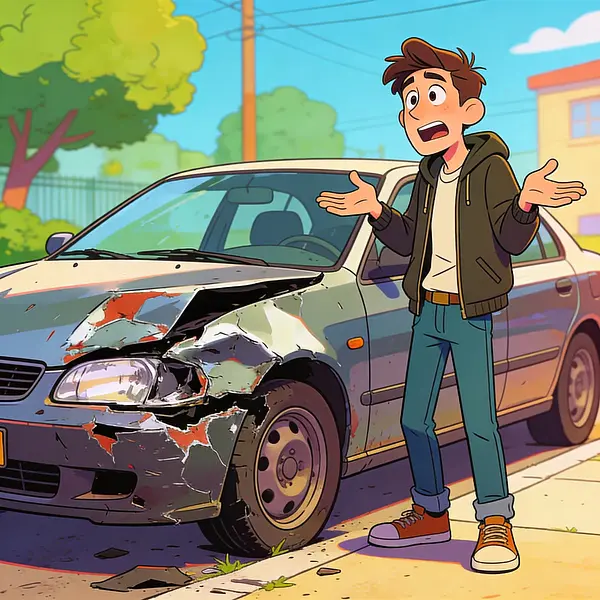
Any car accident can be devastating, but being hit by an uninsured driver can make matters much worse. Who will pay for the damages? How will your medical bills be paid? Here are a few important steps to protect your rights and recover compensation.
Being involved in a car accident is stressful enough. Discovering the at-fault driver has no insurance can make a terrible situation feel hopeless.
In Colorado, approximately 13% of drivers operate vehicles without insurance, despite it being illegal under Colorado law.
If you’ve been hit by an uninsured driver in Colorado Springs or anywhere in El Paso County, understanding your legal options is critical to protecting your financial recovery.
Key Takeaways – What to do If You Get Hit by an Uninsured Driver
- Call police at the crash scene to get an official report documenting the uninsured driver.
- Take photos of vehicle damage, scene conditions, and collect names/contact info.
- Seek medical attention right away. Many injuries aren’t immediately obvious.
- File an Uninsured/Underinsured Motorist (UM/UIM) claim with your insurance if you have it.
- If you opted out of UM/UIM, you can sue the uninsured driver — but collecting payment can be hard.
- Consider seeking criminal restitution if the uninsured driver is charged with a traffic offense.
- Don’t accept quick lowball settlements before knowing the full extent of injuries.
Immediate Steps After the Accident
1. Call Police and Document Everything
Even if the other driver admits they don’t have insurance, call law enforcement immediately. A police report is essential documentation for any future claims. While waiting for officers to arrive:
- Take photos of all vehicles, damage, license plates, and the accident scene
- Get the other driver’s name, contact information, and driver’s license number
- Collect contact information from any witnesses
- Note road conditions, weather, time of day, and any other relevant factors
Do not leave the scene even if the other driver has no insurance. Leaving could jeopardize the strength of your case, and potentially result in criminal charges against you.
Especially if they are at fault, you’ll want to stay and explain the circumstances. If the other party is not charged as being at-fault (careless driving, failure to yield, running a stop sign, etc.), it will be very difficult to collect for your damages.
2. Seek Medical Attention Immediately
Many accident injuries don’t manifest symptoms immediately. Adrenaline can mask pain, and some injuries like whiplash, concussions, or soft tissue damage may take hours or days to become apparent.
Visit an emergency room or urgent care facility as soon as possible after the accident. Medical records created immediately after the collision are crucial evidence linking your injuries to the accident.
Delaying treatment gives insurance companies ammunition to argue your injuries weren’t serious or weren’t caused by the accident. This is true even in a case where you are pursuing a recovery with your own insurance as a UM claim.
Understanding Colorado’s Uninsured Motorist Laws
Colorado is an “at-fault” state for car accidents, meaning the driver who caused the accident is responsible for damages. But what happens when that driver has no insurance to pay for your medical bills, lost wages, and damage to your car?
Uninsured Motorist Coverage (UM) and Underinsured Motorist Coverage (UIM)
Colorado law requires insurance companies to offer Uninsured Motorist (UM) and Underinsured Motorist (UIM) coverage to all policyholders. However, drivers can reject this coverage in writing.
This coverage is designed precisely for situations where you’re hit by someone with no insurance or insufficient insurance.
- Uninsured Motorist (UM) Coverage pays for your damages when you’re hit by a driver with no insurance.
- Underinsured Motorist (UIM) Coverage pays when the at-fault driver has insurance, but their policy limits are too low to cover your full damages.
- Under C.R.S. § 10-4-609, insurance companies must offer UM/UIM coverage equal to your liability limits unless you specifically reject it in writing. If you have UM/UIM coverage, this becomes your primary avenue for compensation after being hit by an uninsured driver.
Should you obtain UM or UIM coverage on your auto insurance policy?
As an attorney who handles these cases frequently, of course I have UM and UIM coverage. I have Medical payments coverage (MedPay) as well.
I have seen many cases where UM/UIM saved the day on cases with serious injuries where my client may not have been able to recover for their losses. I highly recommend obtaining UM/UIM coverage.
I also highly recommend MedPay coverage. These options will raise your rates, but it is typically money that is very well spent if you are ever injured in an accident.
This is a great way to protect yourself from irresponsible drivers on the road who do not have enough insurance coverage, or insurance at all.
How UM/UIM Coverage Works
When you file a UM/UIM claim, you’re essentially making a claim against your own insurance policy. Yes, even though you weren’t at fault.
Think of it this way: your insurance company is stepping into the shoes of the uninsured driver who should be paying for your damages.
Your UM/UIM coverage can compensate you for:
- Medical expenses and ongoing treatment
- Lost wages and diminished earning capacity
- Pain and suffering
- Property damage (in some policies)
- Permanent disability or disfigurement
The process involves:
- Notifying your insurance company about the accident
- Providing documentation of your damages
- Negotiating a settlement with your own insurer
- Potentially pursuing arbitration if you can’t reach agreement
Important note: Insurance companies, even your own, have financial incentives to minimize what they pay you. Having experienced legal representation can level the playing field.
What If You Don’t Have UM/UIM Coverage?
If you rejected UM/UIM coverage you still have options, though recovery becomes more challenging.
1. File a Claim Against the Uninsured Driver Directly
You can pursue a personal injury lawsuit against the uninsured driver personally. If successful, you would obtain a judgment for your damages.
However, the practical reality is that uninsured drivers often lack financial resources to pay a judgment. You may win in court but struggle to collect actual compensation.
Talk to an attorney about whether the “juice is worth the squeeze” in this type of case. You may be better off pursuing option #2.
2. Contact the District Attorney’s Office About Restitution
If the uninsured driver is criminally charged for the accident, such as for careless driving, reckless driving, or DUI, you have another avenue for recovery through the criminal justice system.
Also learn: Careless Driving vs Reckless Driving.
Restitution in Colorado criminal cases allows victims to recover economic losses through the criminal proceedings. Under C.R.S. § 18-1.3-603, courts must order defendants convicted of crimes to pay restitution to victims for their economic losses.
Here’s how to pursue restitution:
Contact the District Attorney’s Office handling the criminal case. In El Paso County, this is the 4th Judicial District Attorney’s Office. Inform them you are a victim seeking restitution.
Document Your Losses thoroughly. Provide the DA’s office with:
- All medical bills and treatment records
- Repair estimates or total loss valuations for your vehicle
- Documentation of lost wages
- Receipts for out-of-pocket expenses related to the accident
Submit a Victim Impact Statement if the case goes to sentencing. This statement explains how the accident affected you financially and physically.
The court will order restitution as part of the defendant’s sentence. While collection can still be challenging if the defendant lacks resources, the restitution order follows them and can be collected through wage garnishment, tax refund interception, and other enforcement mechanisms.
Restitution payments will be ordered as a condition of payment.
Important note: Restitution in criminal cases typically covers only economic damages (medical bills, lost wages, property damage), not non-economic damages like pain and suffering. You may still need to pursue a civil lawsuit for full compensation.
3. Other Potential Sources of Recovery
Depending on your situation, additional options may include:
- Your Health Insurance: Your health insurance should cover medical treatment, though they may seek reimbursement if you later recover compensation.
- MedPay Coverage: If you have Medical Payments (MedPay) coverage on your auto policy, it pays medical expenses regardless of fault, up to your policy limits. This can be a lifesaver in under-insured/uninsured motorist cases. If you had serious injuries, need surgery, or have an extensive hospital stay, medical bills can be tens of thousands of dollars very quickly. Good MedPay coverage can cover some or all of those bills.
- Your Collision Coverage: If you carry collision coverage, it will pay to repair or replace your vehicle minus your deductible, even if the other driver was uninsured.
Common Mistakes That Harm Your Case
Accepting a Quick Settlement
Insurance companies often offer quick, lowball settlements before you fully understand the extent of your injuries. Once you accept and sign a release, you typically cannot pursue additional compensation even if you discover more serious injuries later.
Giving a Recorded Statement Without Legal Advice
Insurance adjusters,even from your own insurance company, may ask for a recorded statement. These statements can be used against you. That is why they record them.
Talk to an attorney before making any kind of statement about facts or injuries to an insurance company. Remember: Adjusters are trained to ask questions designed to minimize your claim’s value.
Posting About the Accident on Social Media
Insurance companies routinely monitor social media. A post showing you smiling at a family gathering can be mischaracterized as proof you’re not really injured, even if you’re putting on a brave face despite chronic pain.
Missing Medical Appointments
Gaps in treatment give insurance companies ammunition to argue your injuries aren’t serious. Follow all treatment recommendations from your healthcare providers.
Why You Need an Experienced Personal Injury Attorney
Uninsured motorist claims can be complex, especially when dealing with your own insurance company. Insurance companies have teams of lawyers and adjusters working to minimize payouts.
You deserve an experienced Colorado personal injury lawyer fighting for your full compensation.
As a personal injury attorney serving Colorado Springs and El Paso County, I understand the legal system. I know the tactics insurance companies use, and I know how to counter them effectively.
At the McDowell Law Firm, we:
- Investigate your accident thoroughly and gather all necessary evidence
- Handle all communication with insurance companies
- Document your full damages, including future medical needs
- Negotiate aggressively for maximum compensation
- File a lawsuit if necessary to protect your rights
- Coordinate with the DA’s office if criminal restitution is available
- Advise you on all available sources of recovery
Time Limits: Colorado’s Statute of Limitations
Colorado law imposes strict deadlines for filing personal injury claims. Under C.R.S. § 13-80-101, you generally have three years from the date of a motor vehicle accident to file a lawsuit. (Note: different types of claims have shorter statutory time limits)
Don’t wait. The sooner you contact an attorney, the stronger your case will be.
Contact the McDowell Law Firm Today
If you’ve been hit by an uninsured driver in Colorado Springs, Monument, Fountain, or anywhere in El Paso County, contact the McDowell Law Firm for a free consultation. We’ll review your case, explain your options, and fight to get you the compensation you deserve.
You shouldn’t have to pay for someone else’s negligence or their failure to carry insurance.
Call us today or contact us online to schedule your free case evaluation. We handle personal injury cases on a contingency fee basis, meaning you pay nothing unless we recover compensation for you.
Disclaimer: This blog post is for informational purposes only and does not constitute legal advice. Every case is unique, and outcomes depend on specific facts and circumstances. For advice about your specific situation, contact an experienced Colorado personal injury attorney.