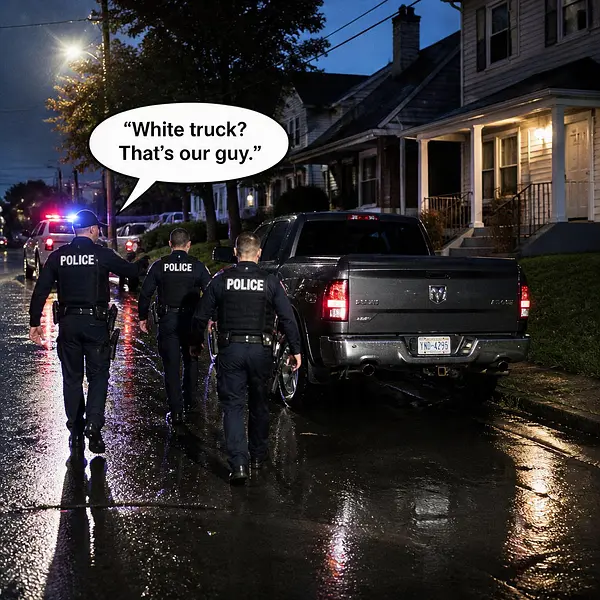
Getting pulled over by the police can often be an anxiety-inducing experience. When the officer asks to search your car, the stakes are raised considerably. Many drivers do not realize that they still have strong constitutional protections during a traffic stop. Understanding those rights can be the difference between a citation and criminal charges.
As a former Deputy District Attorney and current criminal defense attorney in Colorado Springs, I have handled hundreds of vehicle search cases. I have seen how these searches are justified by law enforcement, challenged, and sometimes thrown out entirely.
Quick Summary for Colorado Drivers (TLDR)
- You have the right to refuse consent.
- Police need real facts to develop probable cause to search without consent.
- Traffic stops cannot be extended for dog searches.
- Marijuana odor is no longer automatic probable cause for a search.
- Roadside sobriety tests are voluntary.
- Illegal searches can get evidence thrown out in court.
Your Fourth Amendment Rights in Colorado
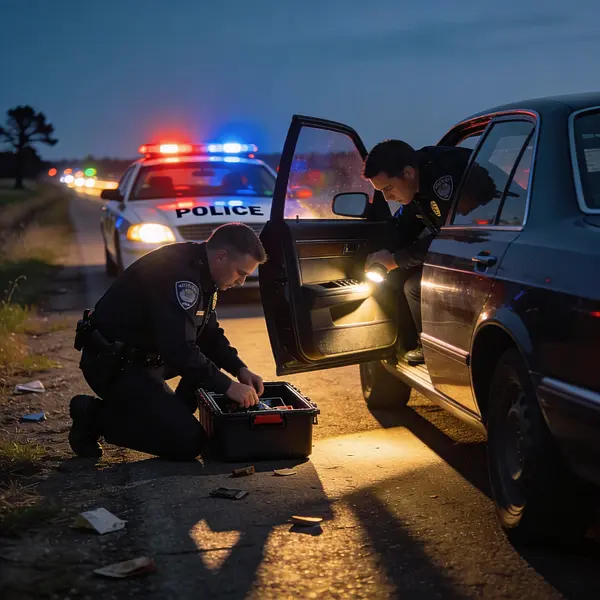
The Fourth Amendment protects you from unreasonable searches and seizures. That protection applies to your vehicle, even during a traffic stop. However, cars receive less protection than homes because they are readily mobile. This creates the “automobile exception” to the warrant requirement.
Can police search your car without a warrant?
The automobile exception allows police to search a vehicle without a warrant only when they have probable cause to believe it contains evidence of a crime. Police cannot search simply because they want to.
Three Ways Police Can Legally Search Your Car
1. You Give Consent
This is the most common reason cars get searched. If an officer asks to look inside your vehicle, they are asking for your permission.
You have the right to refuse. You do not have to explain yourself. You do not need a reason.
Under Colorado law, consent must be voluntary and evaluated under the totality of the circumstances. Courts ask whether a reasonable person would have felt free to decline under the circumstances. Factors include the officer’s tone, number of officers present, whether weapons were displayed, and whether the person was physically restrained. This comes from Colorado Supreme Court cases, including People v. Munoz-Gutierrez.
Police are not required to tell you that you can refuse consent for it to be valid.
Refusing consent does not give police probable cause. It also does not justify a search by itself.
Should you consent? No.
What to say: “Officer, I do not consent to any searches.”
Say it clearly. Do not argue. Do not physically interfere.
2. Probable Cause
Police may search your vehicle without consent if they have probable cause to believe it contains evidence of a crime. Probable cause requires specific facts, not a simple gut feeling.
Important fact: The fact that a vehicle can be moved easily does create exigency.
Landmark cases:
- Carroll v. United States, 267 U.S. 132 (1925): This case created the automobile exception.
- California v. Acevedo, 500 U.S. 565 (1991): If PC exists, law enforcement can search containers inside the vehicle that could hold evidence.
- Pennsylvania v. Labron, 518 U.S. 938 (1996): Labron clarified that no separate exigency is required beyond probable cause. Mobility itself supplies the exigency.
The Acevedo court established the rule “the police may search without a warrant if their search is supported by probable cause.”
Common probable cause factors in Colorado
Marijuana odor:
Marijuana is legal to possess, but it is still illegal to consume it in a vehicle or have an open marijuana container in a car under C.R.S. § 42-4-1305.5. Marijuana odor alone no longer automatically establishes probable cause in Colorado, but it can still contribute to probable cause depending on the surrounding facts.
Related: Marijuana Laws in Colorado Springs.
In some cases, odor by itself may still support a search, especially if it suggests recent use in the vehicle. Colorado courts apply a totality of the circumstances analysis. Relevant cases include People v. Zuniga and People v. Cox.
Plain view:
If an officer lawfully sees contraband or evidence through your windows, and its criminal nature is immediately apparent, this can justify a search.
The officer must already have a lawful right to be in the viewing position. This is the plain view doctrine, applied in Colorado cases like People v. Schoondermark. (evidence was in plain view, albeit during an illegal entry. In this case, a valid search warrant provided an independent source of evidence)
Admissions and observed impairment:
Statements like “I have drugs in the car” or visible signs of intoxication can establish probable cause.
What does not create probable cause by itself
- Refusing consent
- Being nervous
- Giving vague or short answers
- Looking suspicious
Nervousness can be considered as one factor, but Colorado courts consistently hold it cannot justify a search on its own.
What is probable cause for a search? It’s not an exact standard, but using several cases as a framework, it is a fair probability, based on the totality of the circumstances, that evidence of a crime will be found, judged by what a reasonable officer could conclude from practical, real-world facts.
Also read: Probable Cause vs Reasonable Suspicion in Colorado.
3. Search Incident to Arrest
If you are arrested, police may sometimes search your vehicle. But this power is limited.
Under Arizona v. Gant, officers may search a vehicle incident to arrest only if:
- You are unsecured and within reaching distance of the passenger area, or
- It is reasonable to believe evidence of the offense of arrest is in the vehicle.
The US Supreme Court unanimously held that police may only search the passenger compartment of the vehicle incident to arrest if they have a reasonable belief that the arrestee could access the vehicle at the time of the search, or if the vehicle otherwise had evidence for the offense that resulted in the arrest.
Colorado follows this same rule. In People v. Chamberlain, the Colorado Supreme Court suppressed a vehicle search where the driver was already secured and there was no reason to believe evidence would be found in the car.
Example:
- If you are arrested for DUI and it is reasonable to believe evidence of impairment is in the vehicle, police may search for alcohol, drugs, or open containers.
- If you are arrested on a warrant for failure to appear, and you are already in handcuffs in a patrol car, police generally cannot search your vehicle without another justification.
Drug Sniffing Dogs in Colorado
Police cannot extend a traffic stop just to bring a drug dog.
In Rodriguez v. United States, the Supreme Court held that officers may not prolong a stop beyond the time needed to complete the traffic stop process unless they have reasonable suspicion of another crime.
During a traffic stop, police questioning and actions must stay reasonably related to the purpose of the stop. Officers cannot extend the stop to investigate unrelated matters unless new reasonable suspicion develops.
Colorado adds an extra layer of protection. Under People v. McKnight, a dog trained to alert to marijuana conducts a “search” under the Colorado Constitution because it can detect lawful activity. This case makes some Colorado K9 searches legally vulnerable.
Marijuana Odor After Legalization
Before legalization, marijuana odor almost always meant probable cause. That is no longer true.
Now courts look at:
- Whether the odor suggests recent use in the vehicle
- Whether there are signs of impairment
- Is it burnt or fresh marijuana odor
- Whether there is evidence of illegal quantities
- What else is happening during the stop
Odor alone is weaker than before legalization and increasingly vulnerable to suppression, but it can still support probable cause depending on the facts.
Field Sobriety Tests
You are not legally required to perform roadside field sobriety tests in Colorado. These include the walk and turn, one-leg stand, and horizontal gaze nystagmus.
These tests are voluntary. They are designed to gather evidence, not help you.
Should you do voluntary Field Sobriety Tests? Probably not. I have rarely seen situations where they help a case. There’s no one-size-fits-all rule for participation in FSTs, but I typically say, “when in doubt, don’t give police more evidence that can be used against you.”
A few years ago, I had a client acquitted of a DUI at trial who did FSTs, but refused a chemical test. It was Halloween night, and she was stopped for a traffic infraction.
I had her describe her Halloween costume (tight/restrictive) and her shoes (stiletto heels) to explain why she had trouble walking on an uneven gravelly shoulder in super cold weather. The Jury agreed with us that her poor performance on roadside tests wasn’t necessarily because she was drunk.
I still wish she hadn’t done the sobriety tests. Even though she was acquitted, it was more evidence that made my job harder at trial.
- General Rule: Don’t make your defense attorney’s job harder: Stop talking. Don’t consent to any searches. Don’t give law enforcement any more evidence to use against you.
Important distinction:
- Refusing roadside tests is allowed.
- Refusing a post-arrest chemical test is not the same.
After a DUI arrest, Colorado’s Express Consent law applies under C.R.S. § 42-4-1301.1. Refusing the evidentiary chemical test leads to a driver’s license revocation and can be used in court.
Can you refuse a chemical test? You can, but that refusal can have license consequences and be used against you in court.
The police can also request a warrant to draw your blood. Police can actually get a Judge to review the requests for warrants relatively quickly, and if the Judge approves the warrant, they can force a blood draw. Colorado is an express consent state.
Meaning by virtue of driving on Colorado roads, you already expressly consented to give a sample of your breath/blood when police have probable cause to believe you are driving under the influence of alcohol/drugs or both.
In most cases, drivers have the right to choose between a breath or blood test unless specific statutory exceptions apply, or the police have a basis to limit the test to blood.
A good example of this is when they have probable cause to believe that drugs were used by the driver. Obviously, a breath test would not reveal any drug use, while a blood test can determine the amount of drugs in a person’s system.
Suppression of Illegal Searches
If police search your car without consent, without probable cause, and without a valid exception, the evidence can be suppressed.
Under the exclusionary rule from Mapp v. Ohio, illegally obtained evidence generally cannot be used at trial. Not all illegal searches result in suppression. Courts may apply exceptions such as good faith, inevitable discovery, or independent source.
Common suppression scenarios:
- Dog sniffs that extended the stop
- Searches based only on nervousness
- Search incident to arrest when the driver was secured
- Consent obtained through pressure or intimidation
- Marijuana odor used with no supporting facts
The prosecution bears the burden of proving the search was lawful. Winning suppression requires detailed cross-examination and precise legal arguments.
Conclusion
Your rights only protect you if you assert them. Be calm. Be polite. You may refuse searches and limit your statements beyond basic identification. Let your attorney fight the legal battle later.
This is not an exhaustive list or explanation of Fourth Amendment Laws on Search and Seizures in vehicles in Colorado. It is an overview of some important factors to consider.
As with any case, situations are fact-specific. Speak to your attorney about the facts of your case and do not rely on any information in this blog post (or any blog post for that matter) when making important legal decisions.